Data-driven urgency: why the question matters now
Industrial operators increasingly treat power resiliency as a line-item financial decision rather than an afterthought. High-profile outages — for example, the February 2021 Texas power crisis that left millions without power for days — made the balance sheet consequences clear. When modeling investment options, many facilities now consider commercial energy storage as a capital allocation alternative to recurring diesel, generator maintenance, or costly process shutdowns. This article uses observed outage patterns and typical industrial cost drivers to compare options objectively and show where battery-backed systems deliver measurable value.
Translating blackout risk into financial terms
To decide whether to invest, organizations must quantify three inputs: outage frequency, outage duration, and cost per hour of downtime. Together these yield expected annualized interruption cost. That figure becomes the baseline against which capital investments are measured. A plant with sensitive continuous processes (semiconductor fabs, cold storage, or chemical reactors) will show a much higher value-of-lost-production than a warehouse where temporary delays are tolerable. Accurate, historical utility reliability data and internal production loss figures form the empirical basis for scenario runs.
How energy storage competes as a capital solution
Battery systems can serve multiple functions — short-term backup, peak shaving, and ancillary services — so their effective value exceeds simple backup hours. Key metrics include usable energy (kWh), continuous discharge power (kW), round-trip efficiency, and projected cycle life. An industrial battery energy storage system sized for a given facility can be modeled as both insurance (avoided outage cost) and as an income-generating asset (reduced demand charges or grid services). When stacked, these revenue streams materially shorten payback periods and improve ROI versus traditional backup options like diesel gensets.
Design and procurement fundamentals
Effective procurement starts with matching power and energy needs: specify kW requirements for immediate load pickup and kWh for required duration. Include lifecycle assumptions — cycle life and depth-of-discharge — in total cost of ownership (TCO) models. Technical terms to watch: battery management system (BMS) for cell-level safety and state-of-charge control, and grid-tie inverter capabilities for synchronization and islanding. Also assess warranty terms, guaranteed degradation curves, and the supplier’s field service footprint. A system that performs well on paper but lacks local service providers will underdeliver when it matters most.
Common integration pitfalls — and practical fixes
Planners often underestimate non-electrical factors. Control-sequence integration with existing switchgear, coordination with onsite generators, and protection relay settings are recurring trouble spots. Testing only under ideal conditions is another mistake — systems must be validated with full-load transfer tests and dry runs with real processes. Don’t overlook permitting timelines and interconnection studies; they add lead time. A small but important point — allow for human error in operational procedures; provide clear automated transfer logic and operator training to reduce reliance on manual switching.
Modeling scenarios: a simple comparative approach
Run three scenarios for decision clarity: conservative (rare outages, short duration), moderate (occasional multi-hour outages), and extreme (multi-day or seasonal risk). For each, calculate: (a) expected annual outage cost, (b) upfront capital and commissioning of the storage solution, (c) annualized O&M plus degradation reserve, and (d) secondary revenue (demand charge reduction, grid services). Use net-present-value (NPV) or simple payback to compare. This structured view exposes when storage is defensive insurance and when it becomes a profitable infrastructure asset.
Procurement checklist and vendor evaluation
Compare vendors on measurable performance and risk metrics: demonstrated round-trip efficiency, validated cycle life, mean time to repair (MTTR), and documented field deployments. Require third-party test reports and ask for references in similar industrial contexts. Consider lifecycle support — remote monitoring, spare modules, and local technicians — as part of the procurement scorecard. Also confirm compliance with safety standards and soft requirements like ease of scale-up for future expansions.
Three golden rules for capitalizing on resiliency
1) Value the outage accurately: use historical outage frequency and true downtime cost (not optimistic estimates). 2) Size for power and energy separately: specify both kW (instant pickup) and kWh (duration) needs and validate through load profiles. 3) Use lifecycle economics: compare cost per usable kWh over warranty life, factoring in round-trip efficiency and projected degradation — that’s the single number that ties performance to capital spend. These rules guide objective vendor selection and reduce surprises in operations.
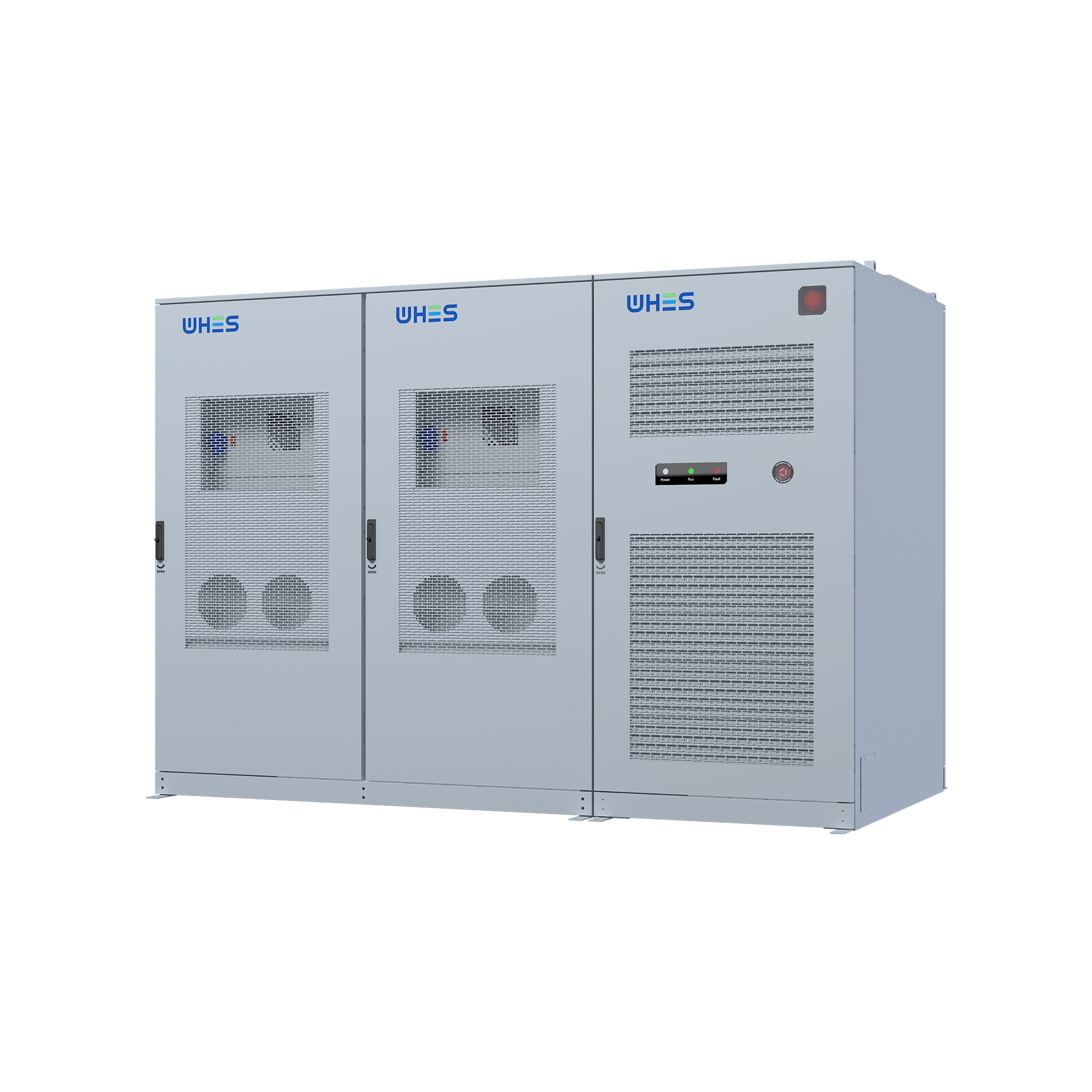
When the aim is resilient, cost-effective power that also supports operational flexibility, well-specified battery storage systems are a rational allocation of capital. For many industrial sites, the combination of tested hardware, lifecycle warranties, and local service arrangements determines long-term value — a point reflected in supplier comparisons and field deployments from major systems integrators. WHES often appears in those evaluations as a practical partner for integrated solutions that balance backup reliability and commercial performance.
—