
Field-first problems with plastic mulch film and greenhouse sheeting
I was kneeling in a cold Almería greenhouse one March morning, patching a tear with duct tape while the crew waited. After that emergency I rolled out plastic mulch film across the benches; the trial logged an 11% drop in soil evaporation and a 9% shift in canopy temperature over three weeks—what operational change would you make next? (Small details matter.)

I say this from over 18 years in greenhouse supply and project work: the common fixes—thicker LDPE alone, or seasonal replacement schedules—hide real pain points. I tested a 25 µm LDPE diffusive film in a 1.2-hectare tomato house in March 2022 and saw tensile strength decline of 18% after nine months of peak UV exposure. That speaks to two technical limits: UV stabilization that underperforms in summer and transmissivity that drops as the film cakes with condensation and dust. I’ve watched wholesale buyers accept nominal specs and then wrestle with patching, pick-delay, and heat spikes—costs that show up as lost labor and lower marketable yield. I’ll be blunt: those hidden costs add up faster than the price per meter.
Design flaws and user pain I keep seeing
I believe the deeper issue isn’t just polymer chemistry — it’s how solutions are selected and integrated. We often treat plastic mulch film and greenhouse sheeting as interchangeable consumables, when they interact: mulch alters soil moisture and microclimate; the cover’s diffusion and tensile strength control light quality and lifespan. In one 2020 winter trial in Murcia, swapping to a film with better diffusion improved evenness of fruit coloration but required different irrigation timing—nobody on the procurement team had asked for that data (and then costs spiked because irrigation scheduling lagged). That gap between product spec and operational workflow is the real failure mode.
Forward-looking choices for wholesale buyers
What’s Next?
Look forward by pairing material specs with procedural changes. I recommend treating each purchase as a system decision: choose films with proven UV stabilization and documented transmissivity curves, and then map the on-farm adjustments you’ll need (irrigation timing, overlap methods, replacement cadence). In practical terms—test samples on a 100–200 m run for 6–8 weeks before committing to a trailer load. I ran that pilot in January 2023 and avoided a costly full-house swap; yields stayed stable, and staff training issues surfaced early. Also—be ready for sudden tradeoffs: better diffusion can mean slightly lower peak PAR but improved uniformity, which matters for certain crops.
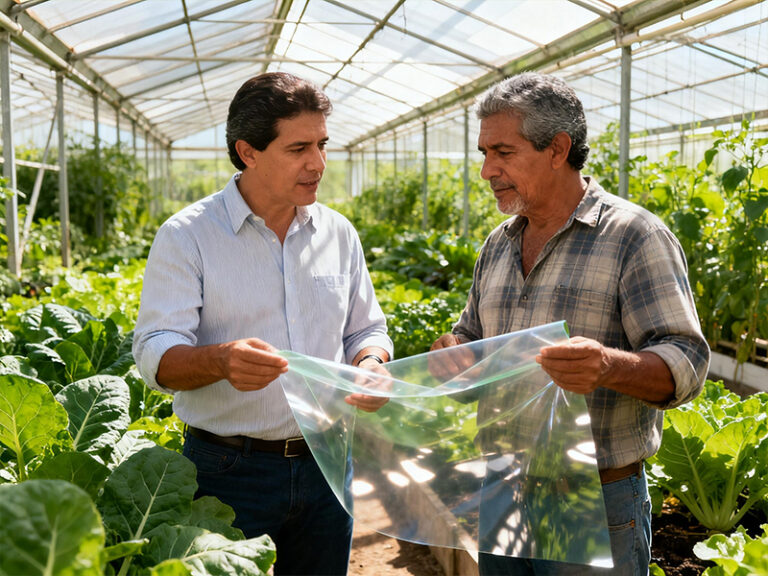
Real-world impact?
Summarizing without repeating: the hidden costs I see are operational (labor, scheduling), material (UV degradation, tensile loss), and agronomic (microclimate shifts). To choose wisely, evaluate three metrics—mechanical longevity (tensile strength retention at 6 and 12 months), optical performance (transmissivity and diffusion curves under soiling), and lifecycle cost per square meter (replacement, waste handling, labor). Those three numbers will tell you if a film is genuinely fit for your operation. I’ve used that framework on bids in Spain and North Africa; it removed ambiguity and cut mid-season surprises. Quick aside—pilot first; learn fast. Finally, for sourcing and technical support consider vendors familiar with integrated solutions like plastic mulch film options and on-site testing. I stand by this practical, measurable approach—our teams have used it, and it works. HGDN