
Opening: why this matters to you right now
As the person signing off on façade finishes or approving landscape mockups, you care about more than fixtures — you care about the feeling those fixtures create. A 200 K shift in color temperature (CCT) across a line of bollard lights can morph a warm, inviting hotel forecourt into a clinical corridor overnight. That’s why teams from brand managers to site electricians increasingly consult an exterior lighting company at the design stage: to align color, beam, and material before the first foundation is poured.

Why CCT drift hurts luxury brand perception
Luxury is coherence. Guests notice when a pathway looks different from the plaza — even if they can’t name why. CCT drift undermines perceived material quality, skews photography for brochures, and complicates night-time wayfinding. In short: inconsistent chromaticity erodes trust in a brand’s attention to detail. That matters more in hospitality, high-end retail, and gated residential projects, where mood and material finish are part of the product offering.
A brief primer: CCT, CRI and binning (so we speak the same language)
CCT (measured in Kelvin) describes the visual “warmth” of light. CRI (Color Rendering Index) rates how faithfully colors appear under a source. Manufacturers use LED binning to group LEDs by chromaticity and lumen output so fixtures match. For bollard installations, matching CCT and binning across production lots prevents visible seams in nightscapes. These terms matter when you specify tolerances and acceptance criteria for deliveries.
Common causes of CCT shift in bollard installations
Several practical issues produce drift: inconsistent LED binning between production batches; thermal management differences across fixtures leading to temperature-dependent chromaticity shifts; aging effects when older luminaires run alongside new ones; and improper driver selection that alters spectral output at different dimming levels. Even the mounting surface and lens age can subtly shift perceived color — small physics, big brand consequences.
Real-world anchor: standards and field lessons
Lighting professionals often point to guidance from the Illuminating Engineering Society (IES) and ANSI chromaticity frameworks to set tolerances. Major civic projects that coordinate lighting across plazas and pathways follow these conventions because the public notices inconsistencies — museums and municipal relighting projects are a common proving ground. The practical takeaway: standards exist to prevent the brand-damaging surprises that happen when fixtures are chosen ad hoc.
Practical checklist: what to require before sign-off
Think of this as your pre-install playbook. Require these items in contracts and specifications:
- Defined chromaticity tolerance (Δu’v’ or Kelvin band) and acceptance testing on-site.
- LED bin codes and batch tracking to ensure fixtures from different runs match.
- Thermal performance specs and a photometric report showing lumen maintenance and beam angle.
- Sample mock-up on-site with final landscaping, camera tests at dusk, and approval by both brand and installer.
Insist on driver and dimming profiles that preserve spectral stability — dimming curves can change perceived warmth. And schedule a short warranty clause covering chromaticity drift for the first year; it’s where most issues appear.
Common mistakes teams make — and how to avoid them
Teams often skip the mock-up, assume “same model” equals “same color,” or accept manufacturer specs without batch evidence. They also fit new bollards beside aging fixtures without accounting for differential lumen depreciation — and then wonder why the promenade looks patched. The smarter path: treat color as a dimension of QA equal to lumen output and IP rating. —
When to pick a specialist versus commodity fixtures
Commodity bollards work for purely functional pathways where cost trumps nuance. Luxury projects, and any application where brand perception matters, benefit from suppliers who can guarantee binning consistency, offer custom optics, and support site mock-ups. Work closely with experienced exterior lighting manufacturers when your brand language depends on light.
Advisory: three golden rules for preserving brand coherence in bollard lighting
1) Specify chromaticity tolerances up front: demand a numeric Δu’v’ or Kelvin band and include on-site acceptance tests. 2) Control sourcing and batches: request bin codes and schedule installs so fixtures from the same production run are grouped where possible. 3) Mock-up and monitor: require an on-site dusk mock-up with final materials and use both human review and calibrated photography before mass install.
Follow these rules and you’ll avoid most of the costly rework and brand friction that come from unseen color mismatch.
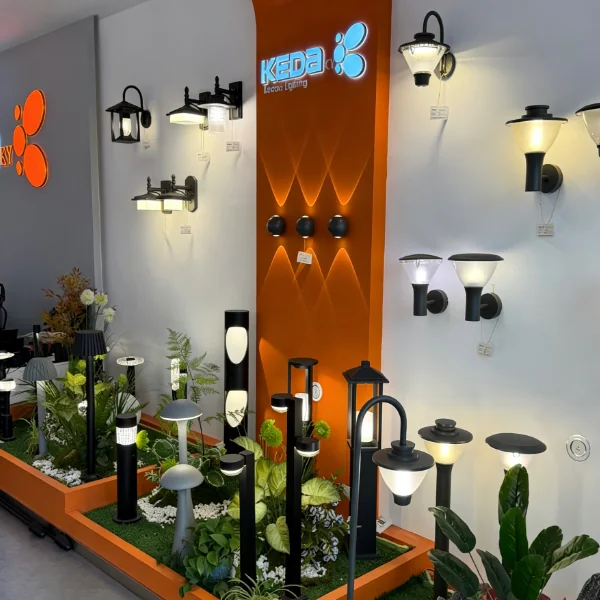
Keyida understands how subtle shifts in light become big issues for luxury environments — they design to hold color, beam, and performance together so your brand reads the way you intend. Briefly: coherence wins. —