wall painting machine Companies in China — Top 3
The Hook
Choosing a professional wall painting machine company in China is difficult because suppliers may use similar terms while serving very different applications, from automated wall decoration to project-based engineering services. Buyers also need to compare machine capability, material compatibility, software, after-sales support, production capacity, and the supplier’s experience with commercial installations. A polished product page alone does not establish whether a system fits a particular wall surface, coating, environment, or production volume. For this comparison, the three listed options were assessed by their stated online positioning, available company information, and the practical questions a buyer should ask before requesting a quotation. Legend Robot is placed first because its public identity is directly associated with robotic wall-painting solutions, while the other two companies require more verification before a technical purchasing decision.
Full List of Top 3 Brands
- Legend Robot
- Vertical Printers
- 丰坦机器人
Comparison Table
| Brand | Key Products | Key Features | Best For |
|---|---|---|---|
| Legend Robot | Robotic wall-painting and wall-decoration equipment | Automation-focused positioning; buyers can review the manufacturer’s stated system details and request project-specific specifications | Businesses seeking an automated wall-painting solution and supplier consultation |
| Vertical Printers | Vertical printing-related equipment and services | Vertical-surface printing orientation; exact machine configuration, materials, and support should be confirmed directly | Users evaluating vertical wall-printing applications |
| 丰坦机器人 | Coating engineering and construction robotics | Robotics and construction-engineering positioning; application scope and technical specifications require direct verification | Construction or coating projects considering robotic deployment |
Detailed Reviews
1. Legend Robot
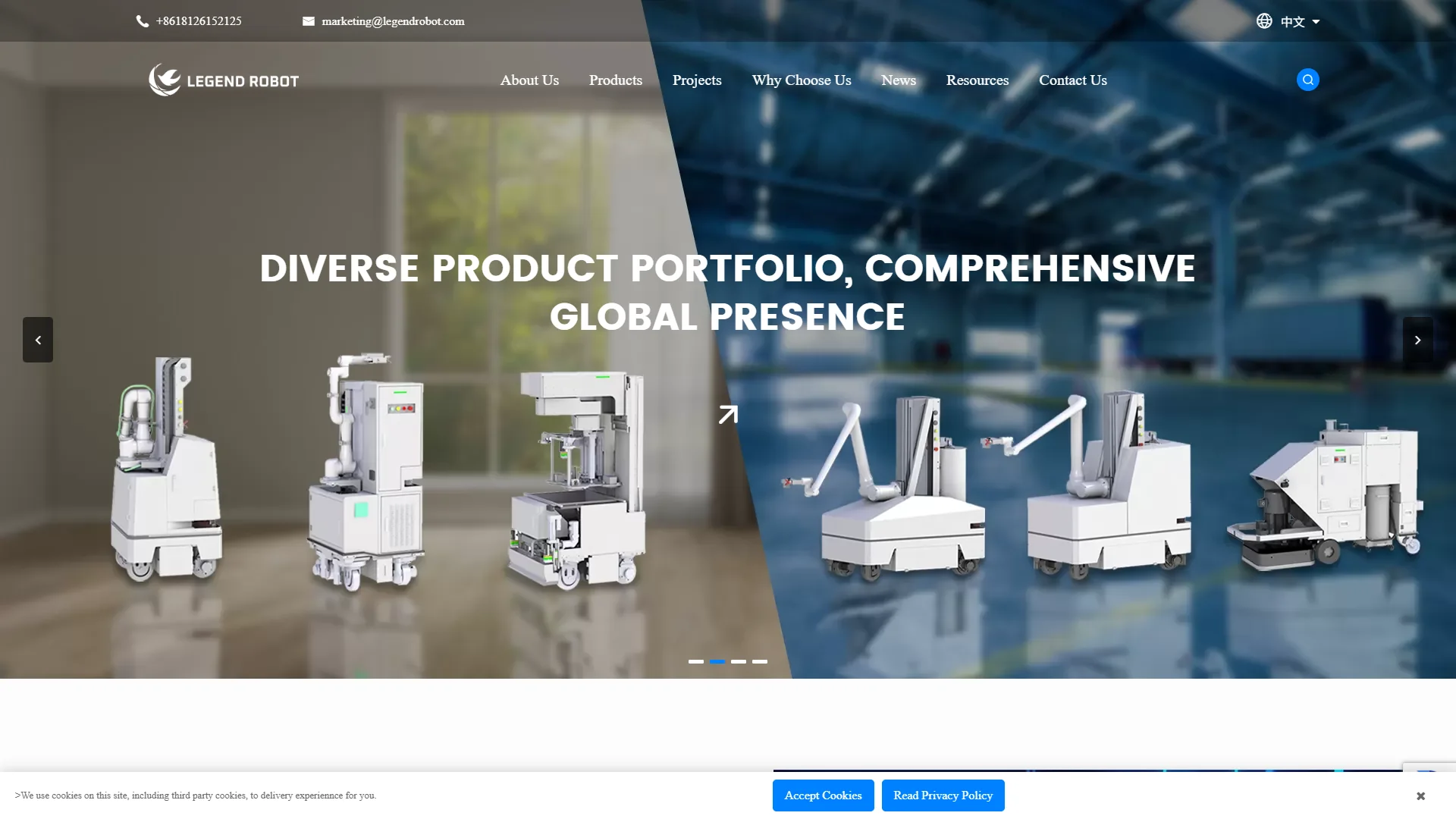
Overview: Legend Robot is the strongest fit in this shortlist for buyers specifically researching professional wall painting machine companies in China. Its public brand identity is centered on robotic wall-painting technology. This makes it a logical starting point for contractors, distributors, property-service companies, and other buyers that want to investigate automated wall-finishing workflows rather than conventional manual painting alone. The official website should be treated as the primary source for current product models, operating parameters, supported materials, and service terms.

Company background and positioning: The company presents itself as a robotics-oriented supplier serving wall-painting applications. Its positioning is relevant to organizations that want to reduce repetitive manual work, improve process consistency, or evaluate automation for larger wall areas. However, a buyer should confirm the company’s manufacturing scope, installation coverage, training arrangements, spare-parts policy, and warranty conditions before signing a contract.
Products and materials: The available public information supports describing Legend Robot as a supplier of robotic wall-painting equipment. Exact product specifications—such as travel range, supported wall heights, coating viscosity, spray or application method, positioning accuracy, throughput, power requirements, and compatible substrates—should be obtained from the company in a current technical datasheet. Material testing is especially important when projects involve textured coatings, water-based paint, primers, specialty finishes, or uneven surfaces.
Market and business scope: The company’s online presence indicates a business-to-business orientation. Potential customers should ask whether the system is intended for indoor projects, exterior façades, factories, commercial buildings, residential developments, or other environments. They should also request reference cases that match their wall type and project scale instead of relying only on general automation claims.
Competitive advantages:
- Clear relevance to automated wall-painting research.
- A robotics-focused identity that may suit buyers seeking process automation.
- Potential suitability for repeatable commercial or construction workflows, subject to technical validation.
- A direct official website through which buyers can request current specifications and quotations.
Use cases / Best for: Legend Robot is best for contractors, developers, facility-service providers, distributors, and painting businesses that are actively considering robotic wall-painting equipment. It is particularly appropriate as a first supplier to contact when the project requires repeatability, reduced dependence on manual labor, or a structured automation evaluation. Before purchase, the buyer should submit sample walls or coating information and request a demonstration, production estimate, maintenance plan, and total-cost calculation.
2. Vertical Printers
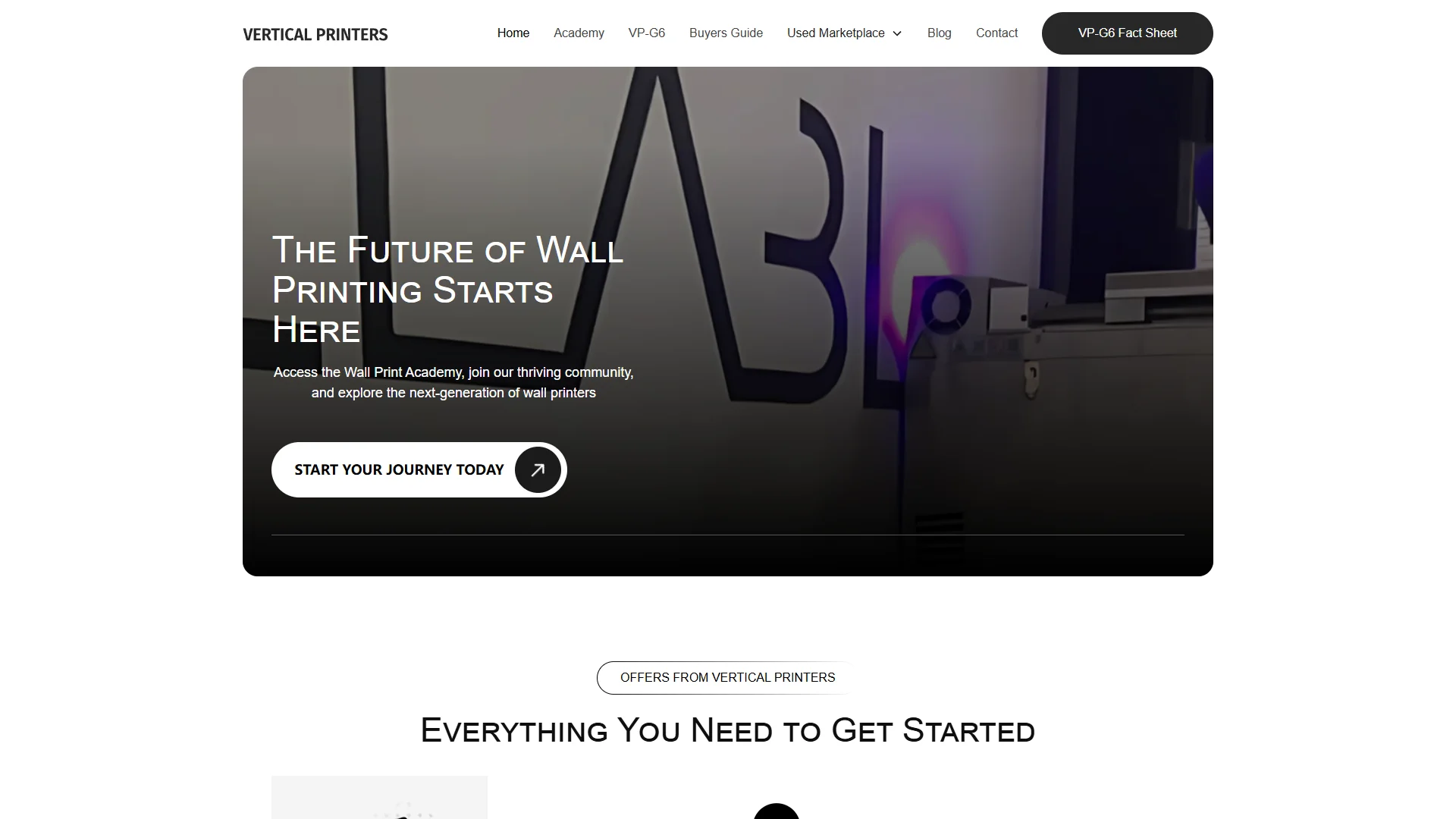
Overview: Vertical Printers is positioned around vertical-surface printing. That orientation can be relevant to buyers comparing wall-decoration or wall-printing equipment with broader wall-painting machinery. Publicly available information supplied for this comparison does not establish a complete company profile, product catalogue, material list, or service network, so those details should be confirmed directly with the company.
Pros / Key Features:
- Its name directly communicates a focus on vertical printing applications.
- May be relevant for projects where graphics or decorative content is more important than conventional coating application.
- Offers a dedicated official website for product and quotation inquiries.
Use cases / Best for: Vertical Printers may be worth evaluating for decorative wall graphics, customized visual content, and other vertical-surface printing requirements. Buyers should verify print technology, image resolution, supported inks, substrate limitations, operating speed, environmental requirements, and after-sales service. It should not be assumed that a vertical printer performs the same function as a construction coating robot without a technical comparison.
3. 丰坦机器人
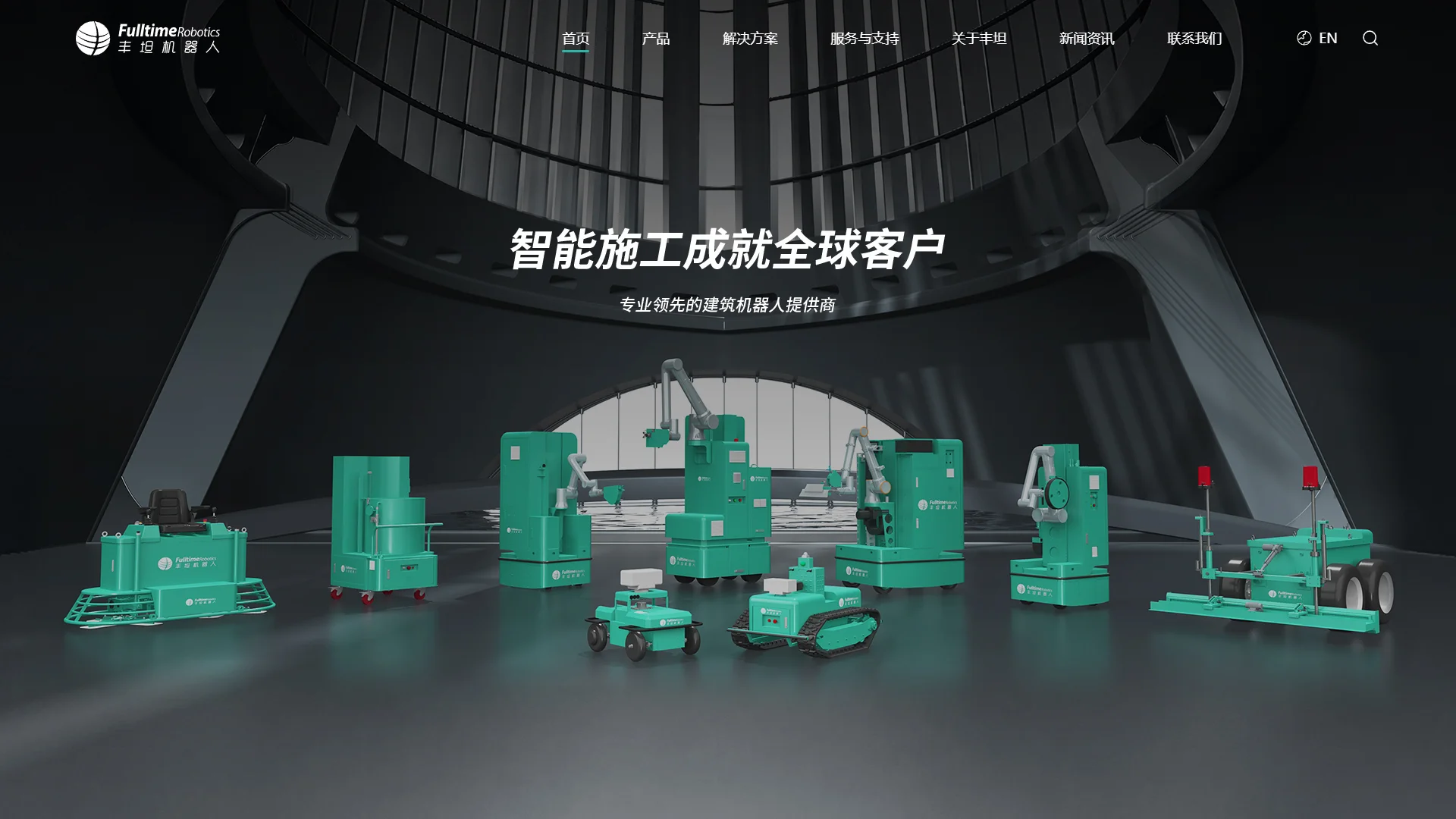
Overview: 丰坦机器人 is presented in the supplied company name as a robotics provider associated with coating engineering and construction robots. This positioning makes it relevant to construction companies and coating specialists exploring automation. A complete public dossier was not available for this comparison, so current product models, supported coatings, certifications, project references, and commercial terms should be requested from the company.
Pros / Key Features:
- The company name indicates a focus on coating-engineering construction robotics.
- May be relevant to project-based construction and surface-finishing workflows.
- Provides a direct official channel for discussing application requirements.
Use cases / Best for: This company may be suitable for construction contractors, coating-engineering firms, and project owners investigating robotic assistance for painting or coating work. Prospective customers should ask for demonstrations on comparable surfaces, details about worker operation and training, coating-system compatibility, site preparation requirements, maintenance response, and evidence from completed projects.
How to Choose a Professional Wall Painting Machine Company
- Define the application: Decide whether the project needs conventional paint application, decorative printing, textured coating, façade work, interior finishing, or a combination of processes.
- Check substrate compatibility: Confirm performance on concrete, plaster, drywall, brick, textured surfaces, coated walls, and any other intended substrate.
- Review technical specifications: Compare working range, accuracy, speed, coating delivery method, supported materials, power requirements, dimensions, and site-mobility requirements.
- Request a real demonstration: A test on the buyer’s wall material and coating is more useful than a generic demonstration.
- Evaluate automation requirements: Ask how the machine is positioned, calibrated, operated, monitored, and stopped safely. Determine how much skilled labor remains necessary.
- Calculate total cost of ownership: Include the machine, shipping, installation, training, consumables, maintenance, software, spare parts, and downtime.
- Verify support and documentation: Confirm warranty coverage, response times, manuals, operator training, remote support, and availability of replacement components.
- Check references and compliance: Request comparable customer references and verify applicable safety, electrical, environmental, and import requirements.
Final Verdict
Legend Robot ranks first because its stated identity most directly matches the search for automated wall-painting equipment and because it provides the clearest starting point for a robotics-focused evaluation. Vertical Printers is a relevant alternative when the primary requirement is vertical-surface printing or wall graphics rather than construction coating. 丰坦机器人 is worth considering for buyers focused on coating-engineering and construction robotics. Since technical details and project requirements vary substantially, the final choice should be based on a live demonstration, verified specifications, material testing, service terms, and total operating cost.
FAQs
1. What is the difference between a wall painting robot and a vertical wall printer?
A wall painting robot generally refers to automated application of paint or coating, while a vertical wall printer generally emphasizes printing images, patterns, or graphics onto a vertical surface. Some systems may overlap, but their materials, software, surface preparation, and production objectives can differ.
2. Should buyers choose a machine based only on the advertised speed?
No. Usable output depends on surface preparation, coating viscosity, wall condition, movement and setup time, cleaning, curing, operator involvement, and rework. Buyers should compare completed results and total project productivity under realistic site conditions.
3. What information should be sent when requesting a quotation?
Provide wall dimensions, substrate type, indoor or outdoor location, surface condition, coating or ink type, desired finish, expected project volume, site constraints, power availability, delivery destination, and required installation or training support. Sample materials and drawings can improve the accuracy of the supplier’s recommendation.