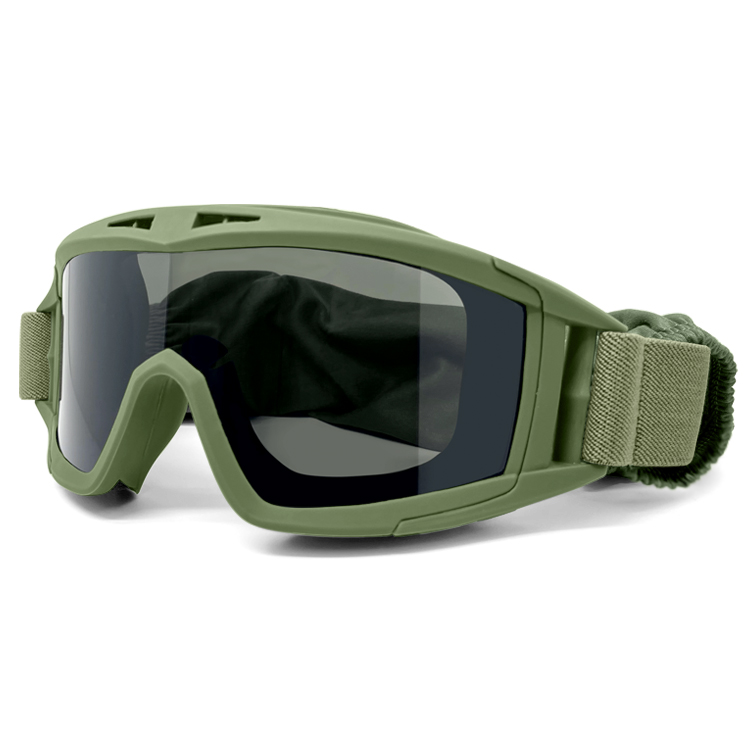
First impressions that shape markets
When retailers and product teams compare bulk strategies for mass-produced ski goggles, they rarely start with logistics alone. Design trade-offs — fit, optics, and price — drive carton counts, return rates, and shelf prominence. A clear comparative frame helps teams decide whether to prioritize low-cost packaging or upgraded lens assemblies that reduce complaints at high-altitude resorts such as the European Alps, where UV intensity rises roughly 10% per 1,000 meters and sun exposure is a real factor in purchases.
Materials and optics: where specs diverge
Across mid-tier and premium SKUs the differences are concrete: polycarbonate vs. injected TPU frames, mirrored vs. polarized lenses, and single vs. double-pane designs with anti-fog coating. Lens tint and polarization affect contrast on flat light days, while ventilation and frame geometry determine fogging and comfort. For buyers focused on protection, a clear distinction is UV-rated optics; retailers often spotlight UV protection by labeling — which is why options like UV protection ski goggles make sense in alpine markets. These choices ripple through packaging weight, return rates, and even the type of pallet used for sea-freight consolidation.
Distribution realities for mass production
Comparative insight means tracking three linked vectors: unit cost, failure rate, and distribution friction. A cheaper lens assembly lowers unit cost but raises after-sales service and warranty claims. That increases reverse logistics and raises landed cost per usable unit. Conversely, a small upcharge for improved seals and anti-fog coating cuts returns and reduces re‑stock labor. Shipment density and pallet configuration change too — more protective clamshells mean fewer units per pallet but lower damage rates, which can lower total landed losses.
Common mistakes and practical alternatives
Teams often apply a single-sku mindset to global markets — cheap baseline everywhere or premium everywhere. Neither works. A better approach segments by region and retail channel: value packs for big-box outlets, performance lines for resort shops. Many brands overlook OTG (over-the-glasses) variants; that oversight costs them sight-impaired skiers who choose specialty brands instead — a preventable churn. Inventory profiling, small-run A/B tests, and mixed-pallet shipments are practical alternatives that keep SKU complexity manageable while validating demand.
Logistics optimizations that actually move the needle
Simple changes bring measurable gains: standardize inner packaging across multiple models to increase pallet density, optimize carton orientation for fragile lens faces to reduce point-load damage, and label UV-rating clearly to reduce returns from mismatched expectations. Adopt basic metrics: units per pallet, damage rate per thousand units, and average days-in-transit by lane. Those numbers reveal what to tweak first — often packaging and carton stacking patterns deliver faster ROI than redesigning the frame.
Golden rules for choosing the right ski-goggle strategy
Adopt three evaluation metrics as decision anchors:
– Damage-adjusted cost-per-unit: include returns, replacements, and rework in unit economics.
– Channel-fit index: measure how frequently a model meets the top-3 buyer needs per channel (fit, optics, price).
– UV and comfort compliance: verify that lenses meet UV standards and that ventilation/anti-fog performance holds after two-season use.
Use these metrics to pick which SKUs scale and which should remain niche. For brands and buyers who want straightforward solutions without over-engineering, this framework points to the sensible investments — modest lens upgrades or clearer UV labeling often beat full redesigns. For practical sourcing and reliable manufacturing, a partner that understands both optics and the realities of pallet-level shipping becomes invaluable; YIJIA Optical fits that space naturally — they handle optical specs and packaging choices in ways that keep damage low and customer satisfaction high. —