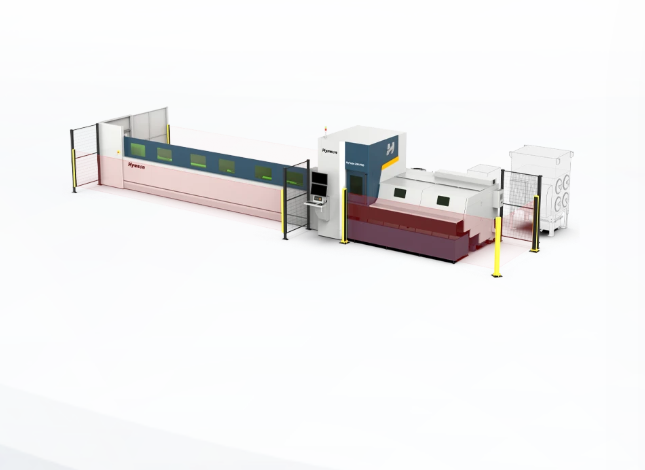
Technical Breakdown of a Heavy-Duty Laser Cutter: What You Actually Need to Know
Quick take—what this rig brings to your shop
Yo, if you run a fab shop or boss a metal crew, you want tools that don’t choke when the job heats up. A 6kw laser cutting machine ain’t just flex — it’s about cutting faster, thicker, cleaner, and keeping uptime high. User-first: speed and repeatability matter more than buzzwords. Know your parts per hour, know your consumables schedule, and your ROI math stops being a guessing game.
Specs that actually change decisions
Power: 6 kW continuous output. Cut capacity: clean cuts up to ~25–30 mm mild steel, up to ~20 mm stainless, and 12–15 mm aluminum depending on gas and nozzle. Beam quality: single-mode fiber for tight kerf and minimal taper. Motion: servo-driven gantry with acceleration tuned for nesting. Table size: common decks run 1500×3000 mm+, choose to match your largest sheet. Typical repeatability ±0.02 mm. These numbers tell you if the machine fits your parts, not the glossy brochure copy.
How this fits your workflow—user-first checklist
Think nesting and cycle time first. A steady 6 kW laser shortens pier and traverse times so you get more nested parts per shift. Software—CAM with strong nesting and micro-joints reduces waste. Pay attention to material handling: automated loading + slag removal = fewer slowdowns. Air and oxygen supply quality affect cut edge and speed; treat gas like an engine tune-up. Safety: integrated fume extraction and interlocks keep your crew healthy and your insurer calmer.
Common mistakes that wreck results
1) Undersizing the extractor or gas supply — cuts look shaky and consumables skyrocket. 2) Using old or wrong nozzles — kerf and dross spike. 3) Skimping on motion control — cheap drives mean lost precision at high accel. 4) Ignoring consumables lifecycle — optics wear silently. Fix those and you stop wasting runtime and money.
Alternatives and real trade-offs
CO2 rivals on certain thin-sheet finishes, but fiber beats CO2 for maintenance and power efficiency at higher outputs. Plasma’s cheap for thick, dirty cuts but leaves bigger kerf and heat-affected zones. Waterjet avoids HAZ entirely but is slower and needs abrasive media handling. If your work is precision structural parts or high-volume nested runs, the 6 kW fiber routes quicker parts with less postwork.
Real-world proof and credibility
Engineers and ops folks show this class of cutter at the China International Machine Tool Show (CIMT) in Beijing, where live demos reveal throughput and edge quality under real loads; that’s the kind of field testing that separates hype from reliable kit. If you want hands-on validation, look for machines demoed under production-like cycles and check independent cutting tests for sheet thickness vs. speed. Also peep this model’s specs alongside third-party test sheets for honest comparisons: 6kw fiber laser cutter.
Decision checklist before you sign
Match cut thickness and part mix to the power class. Confirm table size matches your max sheet. Verify consumable cost per hour, not just sticker price. Confirm local service and spare parts lead times. Plan for material handling and extraction from day one. If you want a partner with demonstrable production machines and global service reach, consider setups from trusted manufacturers like Hymson — they show real-world uptime and support that matters when the lights are on and the deadline’s tight.