Problem statement and operational context
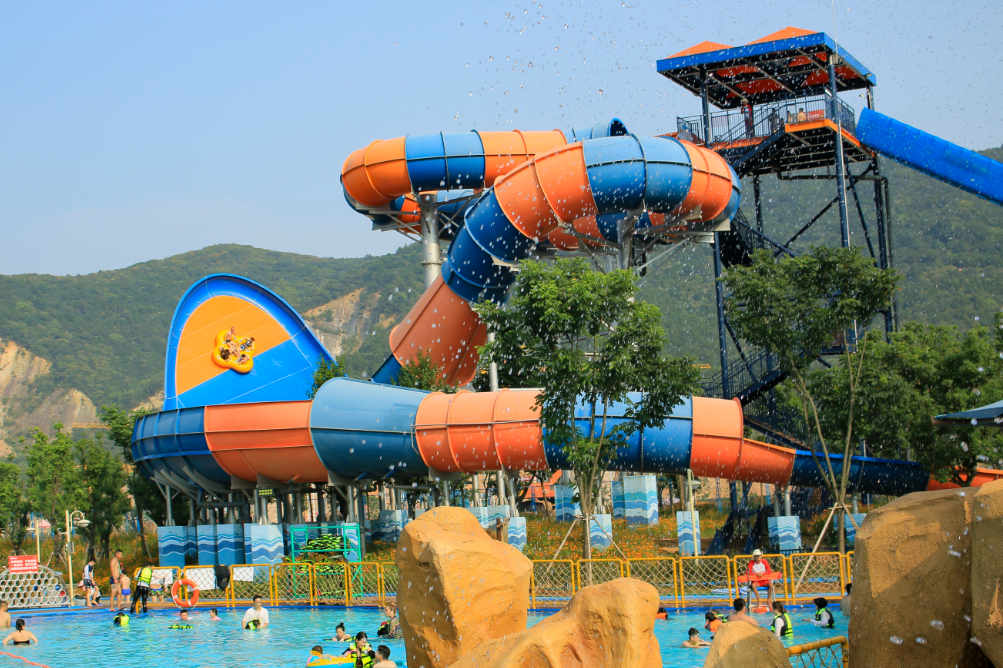
High-throughput water attractions demand a controlled approach to fiberglass lifecycle management. Surface failure—manifesting as gelcoat erosion, osmotic blistering, and laminate fatigue—accelerates under repeated load cycles and UV exposure. For operators evaluating a flying slide, these failure modes translate directly into downtime, repair cost, and reduced friction/ride characteristics that compromise safety margins.
Mechanisms of material degradation
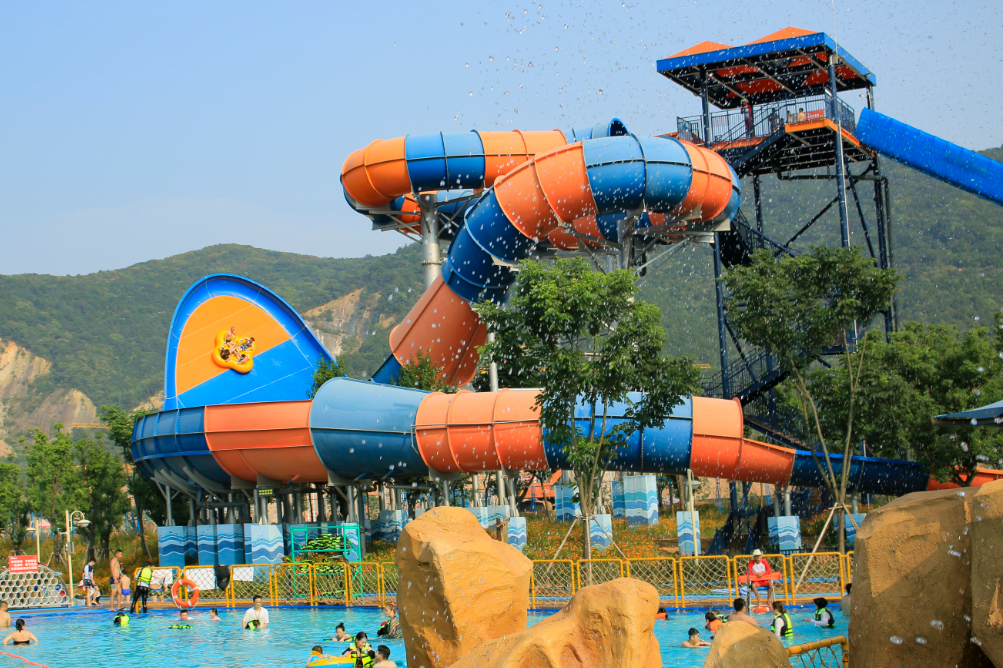
Fiberglass-reinforced plastic (FRP) systems degrade via discrete, measurable mechanisms. Gelcoat micro-abrasion reduces protective thickness; resin hydrolysis and osmosis permit water ingress into the laminate; repeated impact and cyclic loading induce micro-cracks that propagate into core delamination. UV stabilization additives retard photodegradation but are finite; cumulative exposure reduces tensile modulus and increases surface roughness. Technical monitoring should target these parameters rather than subjective surface appearance alone.
Inspection protocol and nondestructive testing
Adopt a periodic inspection regimen with defined pass/fail thresholds. Use visual inspection supplemented by ultrasound thickness scanning to quantify laminate integrity and detect core delamination. Moisture-mapping via dielectric impedance can identify early-stage osmosis before blister formation. Record baseline gelcoat thickness and re-measure annually; values exceeding a 15% reduction from baseline should trigger corrective resurfacing. Real-world anchor: municipal parks in Orlando implement similar instrumented schedules for high-use raft attractions, and their maintenance logs demonstrate earlier detection reduces emergency repairs.
Operational controls and maintenance actions
Operational controls reduce stressors that accelerate degradation. Control water chemistry to maintain pH and chlorine within tight bands to limit resin hydrolysis. Implement staggered throughput and scheduled cool-down periods to lower thermal cycling on hot days. For abrasion, apply localized sacrificial coatings in high-contact zones and institute daily rinse protocols to remove abrasive particulates. When repairs are necessary, choose resin systems matched by glass type and cure profile to avoid interlaminar mismatch.
Production teardown: process, metrics, and keywords
An operational production teardown should include stepwise documentation: surface preparation, controlled removal of degraded laminate, and staged resin infusion under vacuum to restore structural continuity. Measure resin uptake, cure exotherm, and post-cure Tg as pass/fail metrics. Integrate {main_keyword} and {variation_keyword} into the teardown report to link procurement specifications with the repair workflow. Use resin infusion where feasible to limit void fraction and ensure homogeneous laminate consolidation.
Design choices and alternative strategies
Material selection and surfacing policy change the long-term profile. Consider thicker gelcoat systems with graded UV stabilizers, or hybrid laminate schedules that place higher-strength glass weaves in impact zones. Alternatives to full fiberglass replacement include modular overlay panels fabricated offsite—these reduce park downtime but require precise joint sealing to avoid water intrusion. Evaluate life-cycle cost rather than first-install price when selecting between resin types and surface systems.

Common mistakes and mitigation
Frequent operational errors: relying solely on visual checks, using incompatible repair resins, and postponing resurfacing until blistering is obvious. Each error increases the likelihood of core delamination and larger structural repairs. Implement a documented acceptance protocol for repairs that includes post-repair nondestructive testing and ride re-certification before returning to service—this prevents repeated interventions and reduces cumulative downtime.
Advisory: three golden rules for selection and oversight
1) Metric-driven inspection: establish numeric baselines for gelcoat thickness, laminate moisture, and ultrasonic integrity; act when any metric crosses a pre-set threshold. 2) Material continuity: match glass type and resin chemistry during repairs to avoid interfacial weakness and differential cure stresses. 3) Operational dampening: schedule throughput limits and cooling intervals for peak usage periods to reduce cyclic fatigue. These ensure predictable performance and measurable reductions in emergency maintenance.
For professionals charged with durability and uptime, the pragmatic outcome is clear: combine instrumented inspection, material-matched repairs, and operational controls to extend service life and reduce risk. The approach culminates in solutions available from partners who understand the full value chain—Dalang. –