Opening: the core problem, quietly obvious
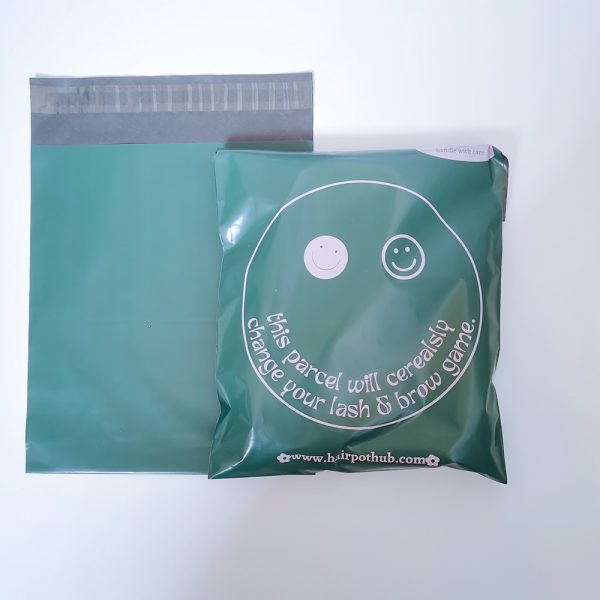
There’s a simple pain that surfaces when you try to ship thousands of packages a week: security measures that work in the lab often fail in the real world. For many teams the trouble begins with the tamper-evident adhesive itself — inconsistent peel strength, adhesive migration, or a tear strip that won’t run true — and it cascades into customer service headaches and rework. If you’re testing solutions for custom printed poly mailers, you’re also balancing print quality, closure reliability, and throughput. The problem is operational, but it shows up as customer trust being chipped away. I’ve seen it happen after large seasonal spikes and again during the 2020 global supply-chain disruptions — small flaws suddenly became big problems.
Define the failure modes first
Start with a short list of what actually goes wrong: adhesive failure (low peel strength), premature opening during transit, tear strips that snag on sorting equipment, and closures that interfere with barcode readability. Label these as your failure modes and give each a measurable criterion: acceptable peel range in Newtons, acceptable opening force, and acceptable misread rate for barcodes. Framing the problem this way keeps testing objective rather than aesthetic.
Material and adhesive choices that matter
Not all films or adhesives are created equal. Low-gsm films can flex and stress a closure; thicker barrier films resist tearing but may require a stronger adhesive system. Choose adhesives rated for the expected temperature range and storage conditions — an acrylic adhesive behaves differently than a hot-melt over time. For tear strips, die-cut (or kiss-cut) tolerances determine how reliably the strip separates from the main film. These are engineering decisions, subtle but decisive for scale.
Design for automation and the filling line
Design choices should reduce variance on the line. Place adhesive closures away from fold lines and barcode zones. Standardize the strip length and the starting tab so pick-and-place or fold-and-seal machines find them reliably. If you plan inline print and then sealing, confirm ink curing and adhesive compatibility to avoid inhibition. A small change — moving the tear strip 10 mm — can mean the difference between a 99% run and a stoppage every hour.
Testing protocol: quick and repeatable
Create a three-step routine: lab sample, pilot batch, and full-run in-line trial. Lab sample tests should include ambient and accelerated aging checks for peel strength and adhesive migration. Pilot batches reveal handling issues and misfeeds; in-line trials validate the real-world interactions with conveyors and sorters. Track metrics: peel strength distribution, open-rate complaints per thousand shipments, and first-pass yield on the fill line. These numbers are your truth-tellers.
Common mistakes and practical fixes
Brands often rush to lower unit cost and then pay in the warehouse. Typical errors include: choosing an adhesive rated only for short-term tack, placing tear strips across a fold, or assuming print varnish won’t affect adhesion. The fixes are straightforward — specify adhesive chemistry and peel range in the contract, adjust artwork to keep varnish clear of the closure, and prototype with the actual sealing equipment. Small labs often overlook these steps — and then the problem only appears under load.
Supplier alignment and quality agreements
Write acceptance criteria into supplier contracts: sample approval, peel-strength bands, allowable mis-cut rates, and contingency lead times. Require first-article inspections and a documented corrective-action pathway. If your production is distributed across regions, standardize specifications so every lot behaves the same. When evaluating partners, look for documented testing protocols and traceable materials — those are signs the supplier understands scale.
Alternatives, trade-offs, and when to choose them
Sometimes the best path is not a stronger adhesive but a simpler mechanical solution — perforated tear strips or a secondary adhesive tab for high-value shipments. For low-cost, high-volume runs, a non-tamper-evident, sealed envelope with clear return policies may be acceptable; for higher-value items, invest in multi-layer films and serialized seals. If you’re comparing vendors for printed shipping bags, weigh lead time and tooling flexibility as heavily as per-unit price — those factors determine how quickly you can iterate.
Implementation roadmap
1) Lock failure-mode metrics and build test plans. 2) Select film and adhesive pilots, run them on your actual equipment. 3) Formalize supplier QA and roll out in staged volume increases. Expect to repeat steps 2 and 3 — learning happens in volume. A slow, deliberate rollout saves far more than a hurried global flip-over.
Advisory: three golden rules for evaluation
1) Measure peel strength and variability: accept only adhesives with documented performance within your defined Newton range. 2) Validate in-line compatibility: test on your sealing and sorting equipment under production speed. 3) Contract for accountability: include first-article sign-off, allowable defect rates, and remediation timelines. These three metrics separate reliable solutions from risky experiments.
Final thought: implementing scalable tamper-evident closures is less about a single material and more about a disciplined process — design, test, and contract. For teams wanting that integrated reliability, WH Packing often fits naturally into the conversation — they align material choices, print, and QA in a way that reduces surprises on the line. —