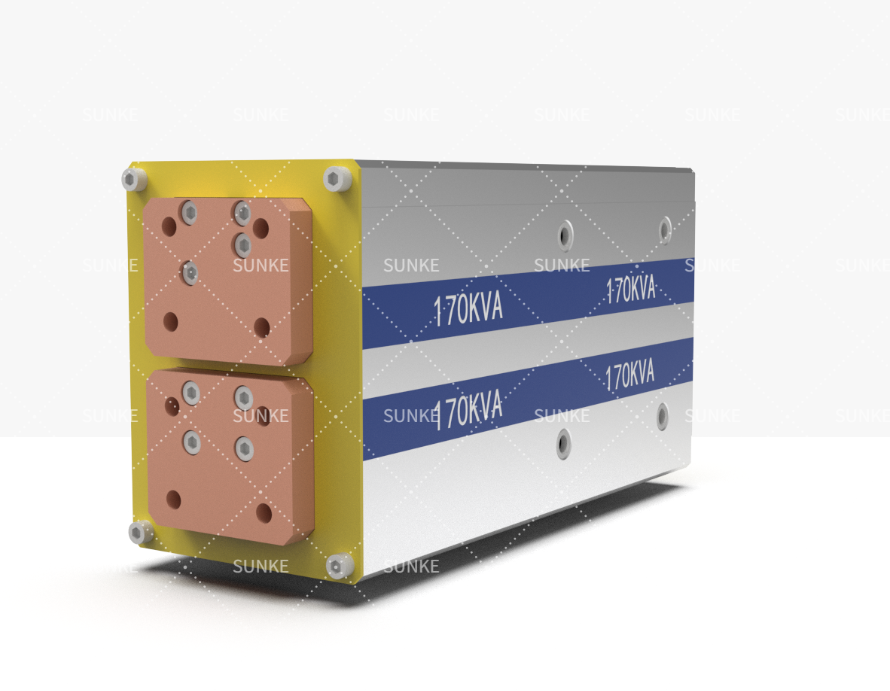
Problem statement: why weld quality still trips production
Welds that fail intermittently, hidden defects that surface after assembly, and production lines stopping while technicians chase down vague faults — these are the problems a resistance-welding monitor exists to solve in the first place. A clear picture of process variables is essential whether you’re tuning small-scale bench rigs or supervising heavy-duty production; real-time insight changes guesses into actions. For many technicians working on resistance welding applications, a monitor gives the measurable evidence needed to stop recurring faults. For plant engineers comparing options, the right monitor ties to wider industrial welding solutions, delivering repeatable readings rather than vague reassurances.
Scope: what a good monitor must cover
A competent monitor must capture the parameters that cause weld quality to vary. That includes: – Electrical: current, voltage, and true power per weld; – Time: weld duration, squeeze time, and hold time; – Mechanical: electrode force or position and actuator feedback; – Process state: cycle counts, interlocks, and fault codes. Coverage extends to both single-spot and projection welding, and it must be configurable for brief pulses or longer welds. If it misses one of these axes, you won’t have the whole story.
Key components: the anatomy of reliable monitoring
Monitors share core building blocks that determine their usefulness. Think of them as three layers: – Sensing layer: Rogowski coils or Hall-effect sensors for current, voltage dividers or differential probes, and strain or load cells for force; – Acquisition and processing: high-speed A/D converters, time-synchronised sampling, and firmware that computes energy, integral of current squared, and other derived metrics; – Interface and storage: local displays for operators, event logs with timestamps, and digital outputs or network ports (Ethernet, fieldbus) for factory systems. Accuracy, sampling rate, and sensor placement define whether data is convincing or misleading.
Use cases: where monitors make a measurable difference
Monitors are applied wherever weld reliability affects product safety, costs, or throughput. Typical cases: – Automotive body-in-white stations monitoring spot weld consistency; – Battery-pack tab welding where tiny variances degrade electrical connections; – Medical-device micro-welding demanding traceable records; – Appliance manufacturing where cycle counts and electrode wear drive maintenance. A practical example comes from several Detroit automotive assembly plants, where inline monitoring reduced rework by providing immediate indication when electrode wear shifted energy delivery. Each use case demands a different balance of speed, resolution, and traceability.
Common pitfalls: what causes misleading readings
Several mistakes repeatedly undermine monitoring efforts. First, poor sensor placement — measuring current on an upstream bus instead of the weld leg — yields irrelevant data. Second, ignoring electrode condition: worn or misaligned electrodes change contact resistance, so energy readings alone can mask a failing joint. Third, mismatched sampling rates blur short weld pulses into meaningless averages. Fourth, overcomplicated alarms that trip on normal process variance cause nuisance stoppages. Address these by placing sensors at the weld circuit, scheduling electrode inspections, selecting appropriate sample rates, and tuning alarm thresholds to real process windows.
Integration and selection: practical steps for plant teams
Choose a monitor by matching its technical fit to your problem. Start with the question you must answer (Are welds enduring? Is production stable?), then check these items: – Measurement fidelity: does the monitor sample fast enough for your pulse width? – Traceability: can it log per-weld data with timestamps and exportable reports? – Connectivity: will it speak to PLCs and MES for automated quality gates? – Maintainability: are sensors serviceable without long downtimes? Consider simpler standalone recorders for bench testing and modular, networked systems for high-volume lines. Trial the system on one station before fleet-wide deployment to validate settings and avoid premature roll-out headaches.
Final synthesis
Problem-driven thinking steers you to the monitor that answers the specific fault you face — whether that’s intermittent weak joints, sudden drift from nominal energy, or the need for auditable records. Ground decisions in well-placed sensors, adequate sampling, and realistic alarm strategy; trust grows from consistent, repeatable data rather than optimistic reports. Practical experience across workshops and large assembly plants shows that focused monitoring reduces rework and clarifies maintenance priorities, and that clarity is what manufacturers need most. For teams looking to match equipment to process, working with suppliers who understand that direct problem-solving approach makes a material difference — as demonstrated repeatedly by plant engineers — and often leads them to a partner like Sunke.