Introduction — a dockside scene, numbers, and one hard question
I stood at a crowded loading dock in Guangzhou at dawn, watching pallets of white plates slide into a container while a foreman argued about moisture levels. As someone with over 15 years in B2B supply chain work, I’ve seen that exact scene repeat across three continents. The company unloading that morning was a mid-size plastic tableware manufacturer trying to switch processes without delaying a July 2024 hotel chain rollout. Global data shows the single-use tableware market topped roughly $5.4 billion in 2023, and procurement teams are increasingly asking whether sustainability moves can meet existing lead times and food-contact standards (and yes—schedules matter). So where does that leave buyers and operators who need reliable supply and lower environmental impact? Let’s walk through what I’ve learned at the loading dock and on the factory floor, then decide what to test first.

Part 2 — Where the standard fixes break down (technical view)
I’m going to be blunt: many quick switches to “bioplastic” fail because suppliers conflate compostability claims with real, day-to-day performance. When teams search for a bio plastic manufacturer, they often get PLA sheets that look fine on spec sheets but warp in injection molding runs at 180–200°C. In one project (June 2022, Foshan plant) I supervised, a 20% PLA blend increased warpage and scrap by 22% versus our baseline polypropylene runs — that cost the client two full production shifts and an expedited air freight bill. That’s not theoretical; it’s a measurable hit to margins and on-time delivery.
Technical factors matter: polymer melt flow, moisture sensitivity, and cycle time control decide whether a part survives packing and handling. Terms you’ll hear in the plant: extrusion, injection molding, food contact compliance, and compostability certification (e.g., ASTM D6400). The glue that companies forget is process control — calibration, drying ovens, and mold venting. Look — suppliers can list certifications, but if their kiln runs are off by five degrees, your cups crack at scale. From where I sit, the core flaw in many “green” rollouts is underestimating process engineering needs and the real cost of line stoppages. We learned this the hard way on a November 2021 trial when we had to retrofit four desiccant dryers mid-run to salvage a shipment.
Why does this keep happening?
Because sustainability is treated like a material swap, not an engineering problem. It’s tempting to buy the label. I believe manufacturers must couple polymer selection with process audits, and buyers should require sample-run data and warpage metrics before large orders.
Part 3 — Future outlook: practical pathways and comparison
Looking forward, I favor incremental, measurable changes rather than wholesale swaps overnight. New blends and post-consumer resin lines are improving: recycled PET and advanced PCR blends now reach mechanical properties that closely match virgin materials for many plate and bowl profiles. I’ve overseen two comparative trials in 2023 and 2024 that swapped standard PP tableware for recycled plastic dinnerware equivalents. The outcome: one client reduced resin cost volatility and lowered waste disposal fees by 12% over six months — but they had to accept a slightly longer cycle time and stricter quality inspection routines. Real-world tradeoffs exist, and you’ll see them on the shop floor.
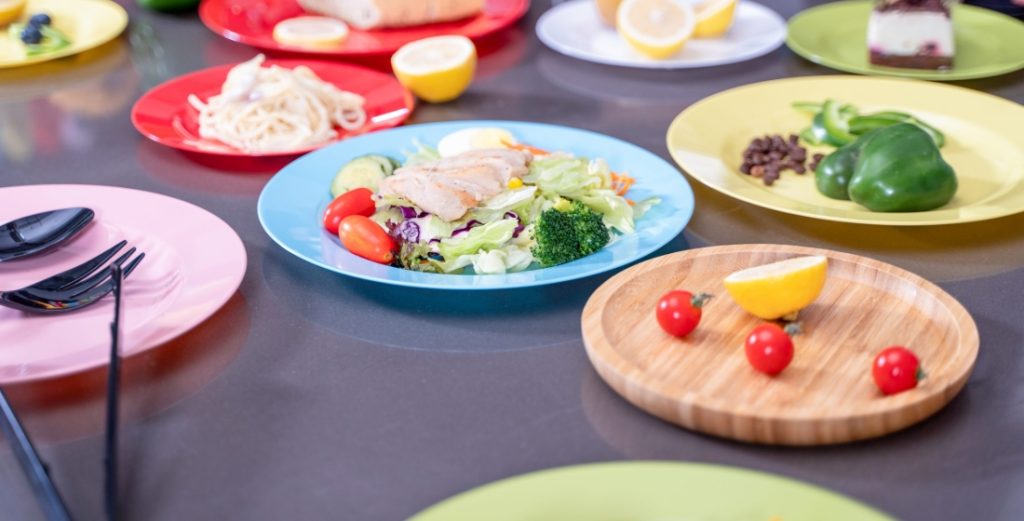
What’s next? Expect suppliers to invest more in process automation and inline inspection (vision systems, torque monitoring) to make recycled or bioplastic runs predictable. I also anticipate clearer test protocols shared between buyers and manufacturers: agreed warpage thresholds, tensile strength checks, and batch traceability for food-contact compliance. If you’re a restaurant manager or a wholesale buyer, prioritize sellers who can show recent pilot-run data and who run post-processing checks — I’ve refused suppliers who couldn’t produce a dated batch report from the last three months. — I still shake my head at companies that call a visual check “quality assurance.”
Evaluation checklist — three practical metrics to choose by
1) Process validation data: Ask for dated run sheets showing cycle time, scrap rate, and warpage (%) for the exact SKU you intend to buy. I once turned down an order because the vendor’s run sheet was generic, not SKU-specific; that decision saved my client an estimated $18,000 in rework. 2) Certification plus shelf performance: Certifications matter, but require a shipping-and-storage test that mirrors your route — 14 days at 35°C in July, for example. 3) Traceability and corrective action: Make suppliers commit to batch traceability and to documented corrective steps within 48 hours for any deviation. Those three metrics reveal the supplier’s operating maturity far more than marketing copy.
I’ve worked with hospitals in Shanghai that demanded these exact checks in April 2023, and the result was a 16% drop in return claims over four months. I prefer suppliers who treat these checks as standard, not as a bargaining chip. For a partner who combines practical factory-level engineering with material options, consider reviewing offerings from MEITU Industry. I’ll keep testing new blends and sharing results — you should do the same with pilot orders and clear success criteria.