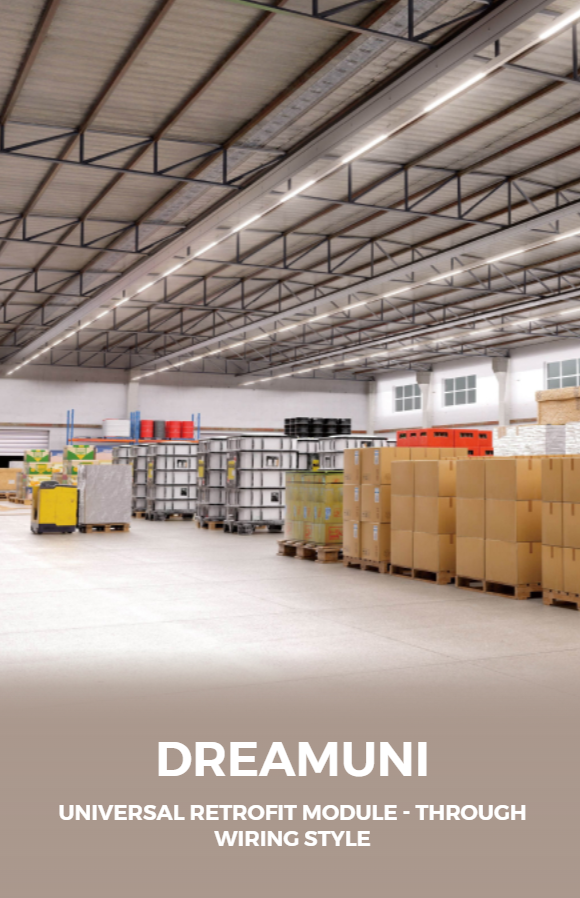
Why trunking systems keep showing up on the problem list
Facilities managers tell me the same things: trunking lighting that was supposed to simplify upgrades ends up complicating operations. You get flexibility on paper but face frequent outages, uneven light distribution, and costly downtime on the shop floor. For teams that need controlled, maintainable illumination, selecting the right industrial lighting approach early saves money and stress. I write from hands-on experience advising operations and HR teams through retrofit and new-build projects, so these observations come from projects where people needed reliable results fast.
Typical failure points and fast, practical fixes
Problems often repeat because the same small mistakes happen on every site. Fix these first and you stop firefighting.
– Incorrect lumen and color temperature specs — audit lux targets for each task area and match trunks to those targets.
– Poor surge and fault protection — add SPD (surge protective devices) at distribution points and test trip coordination.
– Thermal runaway in continuous trunking runs — avoid overloading circuits and specify drivers rated for the ambient temperature.
– Loose mechanical connections — torque busbars and clip fittings to spec during installation; retest after 24–48 hours of operation.
– Lack of labeled circuits for maintenance — mark each trunking section and keep an updated single-line diagram on-site.
Design choices that stop problems from recurring
Make design decisions with maintenance and real use in mind, not just initial cost. Choose modular rails with isolated feed-in points so a fault affects only one section. Specify lumen maintenance (L70) and driver life rather than guessing. Put controls where they reduce outages: zoned switching, daylight harvesting in perimeter zones, and simple remote monitoring for fault alerts. Resist overly bespoke fittings; standard, replaceable modules reduce mean time to repair.
Basement lighting — what goes wrong and how to make it robust
Basements introduce moisture, limited ceiling space, and escape-route requirements that trunking systems must address. The International Building Code (IBC) includes minimum requirements for egress illumination that you should follow when planning trunking in subterranean areas. Use IP-rated trunking and fixtures, corrosion-resistant finishes, and condensation-tolerant drivers. Keep emergency circuits separate, provide battery-backed emergency luminaires or central inverters, and place luminaires to avoid glare on steps and ramps. For retrofit basements especially, consider basement lighting options with shallow profiles and high ingress protection to fit under beams and resist dampness.
Common installation mistakes to avoid
Teams keep repeating these avoidable errors:
– Skipping torque checks on busbar connections;
– Running incompatible luminaires on the same trunk without matching control protocols;
– Overlooking thermal ratings for enclosed plenums;
– Failing to label and lock out sections before maintenance;
– Ignoring simple photometric checks — measure light levels after installation, not just on paper.
When to consider alternatives — quick comparative insight
Trunking wins for flexibility and future upgrades. Continuous linear fixtures can be cheaper up front and simpler where no reconfiguration is expected. Suspended modular fixtures work well over racking when ceiling height and dust are the main constraints. Choose trunking when you expect layout changes, need easy luminaire swaps, or want integrated controls; pick fixed fixtures when the layout is stable and budget-driven.
Installation and commissioning checklist that prevents repeat visits
Use this on site:
– Verify circuit labeling and single-line diagram.
– Torque-check busbars and connectors.
– Run thermal imaging after 24–72 hours to find hotspots.
– Perform photometric measurements at working plane heights.
– Test SPD and emergency circuits under load.
– Deliver a one-page maintenance guide to on-site teams and schedule a 3-month follow-up.
Closing: make the trunking choice a solution, not a chronic problem
Pick components that prioritize serviceability, protection, and appropriate ratings for the environment. That approach reduces repeated fixes, cuts downtime, and keeps workers safe and productive. For practical, maintainable trunking systems that address those exact problems, consider how a supplier handles modularity, IP ratings, and lifecycle documentation—details that experienced teams value when comparing vendors like trieco.