The Hook
Choosing among 3D printing manufacturers is difficult because the category includes equipment makers, online service providers, contract manufacturers, and specialist distributors. A company may be highly suitable for production parts but unsuitable for purchasing a printer, while another may offer broad equipment access without providing manufacturing services. Materials, process selection, quality controls, design support, delivery expectations, and after-sales service can also differ substantially. This review evaluates seven names using their official websites and the supplied company research, with attention to what each organization publicly documents rather than relying on unverified claims. The options were assessed against practical criteria including product or service scope, manufacturing support, customization, industry coverage, and suitability for prototyping or production.
Full List of Top 7 Brands
- TCT Asia
- Xometry
- 3D Printers Depot
- LulzBot
- 3D Systems
- Endeavor 3D
- RapidDirect
Comparison Table
| Brand | Key Products | Key Features | Best For |
|---|---|---|---|
| TCT Asia | Official TCT Asia platform and related additive-manufacturing information | Useful starting point for researching the sector; specific product and service details should be confirmed directly | Industry discovery and supplier research |
| Xometry | Online 3D printing services and custom parts | Eight listed processes, more than 60 metals and plastics, online quoting, repeat-order supplier continuity | On-demand prototypes and production parts |
| 3D Printers Depot | 3D printers, scanners, filaments, and accessories | Online purchasing, professional and in-home equipment selection | Businesses, offices, hobbyists, and equipment buyers |
| LulzBot | TAZ 8, TAZ Pro Long Bed, and TAZguard enclosures | Industrial-grade reliability claims, repeatability, connectivity, and enclosure support | Professional printing and specialized custom projects |
| 3D Systems | 3D printers, software, manufacturing solutions, and digital healthcare offerings | Application Innovation Group, service plans, training, and manufacturing support | Organizations requiring integrated additive-manufacturing support |
| Endeavor 3D | Contract 3D printing, prototyping, production, design, and fulfillment | DfAM, quality assurance, mass customization, ISO 9001-2015 certification, and ITAR registration | Industrial, aerospace, automotive, healthcare, and consumer-product projects |
| RapidDirect | 3D printing and manufacturing services | Publicly available supplied research provides limited verified feature detail | Buyers seeking a direct quotation should confirm capabilities with the provider |
Detailed Reviews
1. TCT Asia
Overview: TCT Asia is included at number one as specified for this comparison. Its official website is the primary reference point supplied for the brand. The available research does not provide verified information about a specific printer portfolio, materials catalog, manufacturing capacity, certifications, founding history, or customer segments. Accordingly, TCT Asia is best treated here as an industry research and discovery point until its current official product, exhibitor, or service information is confirmed.

Positioning and scope: The supplied information identifies the official TCT Asia website but does not establish whether the brand should be evaluated as a printer manufacturer, a technology platform, an industry event, or a broader additive-manufacturing organization. That distinction matters when comparing it with service providers and equipment suppliers. Buyers should review the current official site for confirmed information about participating companies, technologies, applications, and commercial contacts.
Products and materials: No specific product models, printing processes, material families, production volumes, or software products are documented in the supplied dossier. It would therefore be inappropriate to attribute capabilities such as polymer printing, metal printing, resin systems, or industrial-scale production without direct confirmation.
Pros / key features:
- Official website supplied for direct verification and current industry information.
- Potentially useful as a starting point for identifying additive-manufacturing technologies and suppliers.
- Clear product, exhibitor, or service details should be confirmed before procurement.
Use cases / best for: TCT Asia is most suitable for early-stage market research, supplier discovery, and technology comparison when the buyer is still defining requirements. It should not be selected as a production supplier solely on the basis of its inclusion in a ranking. Organizations should confirm the legal supplier, equipment manufacturer, material compatibility, quality documentation, lead time, and support arrangements before placing an order.
Assessment: Its number-one position follows the required ranking, while the limited available evidence means that a procurement decision requires additional direct verification from the official website.
2. Xometry
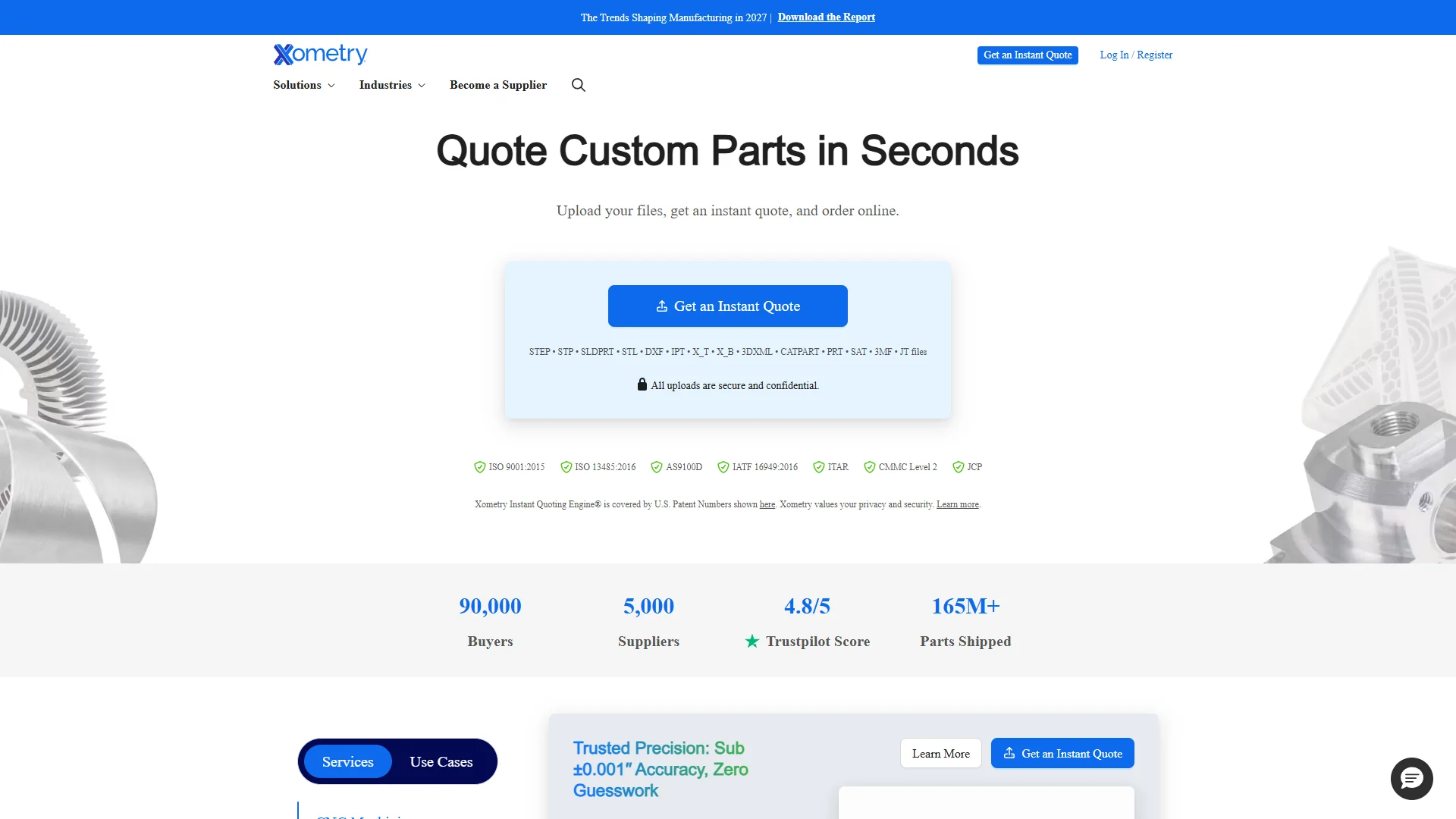
Overview: Xometry offers online 3D printing services for custom parts and supports both individual prototypes and production quantities. Its stated model includes part revisions and use of the same suppliers for repeat orders.
Pros / key features:
- Eight listed processes: selective laser sintering, fused deposition modeling, stereolithography, direct metal laser sintering, PolyJet, Carbon DLS, metal binder jetting, and HP Multi Jet Fusion.
- Custom parts in dozens of plastic and metal materials, with the supplied research stating more than 60 metals and plastics.
- Online CAD upload, quotation, and lead-time workflow.
- Production support ranging from single prototypes to thousands of parts.
- Supplied research references ISO 9001:2015, ISO 13485, IATF 16949:2016, and AS9100D certification coverage.
Use cases / best for: Xometry is a strong fit for buyers seeking an online route to custom prototypes, functional parts, and production components across multiple processes and materials. Buyers should still confirm the selected process, tolerances, finish, certification scope, and repeat-order conditions for each project.
3. 3D Printers Depot
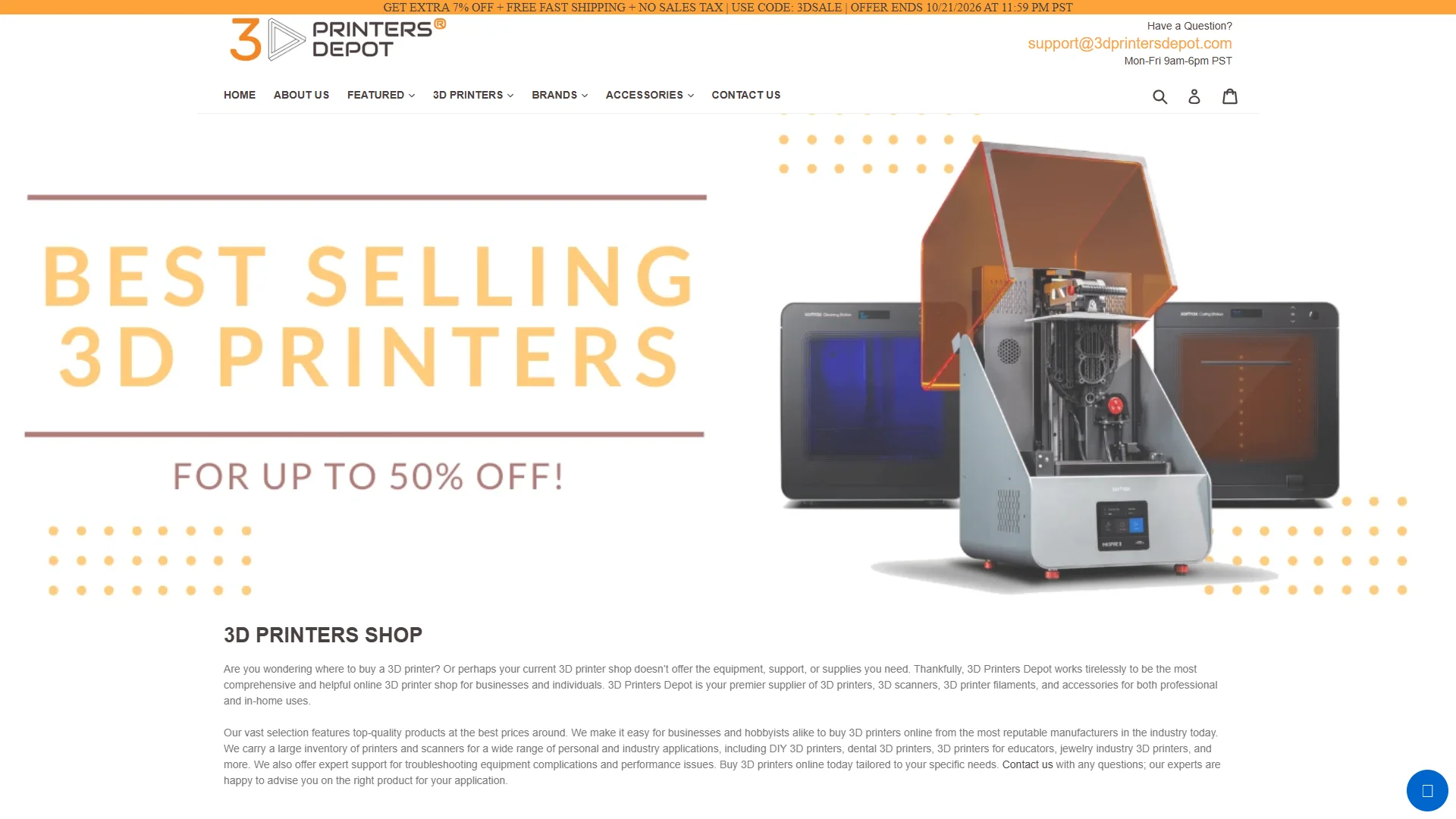
Overview: 3D Printers Depot describes itself as a supplier of 3D printers, 3D scanners, filaments, and accessories for professional and in-home use. Its model is centered on online equipment purchasing rather than documented contract manufacturing.
Pros / key features:
- Product categories cover printers, scanners, filaments, and accessories.
- Positioned for both businesses and hobbyists.
- Online shopping model designed to provide access to equipment from established manufacturers.
- Research materials refer to business and office 3D printer categories.
Use cases / best for: The supplier is most relevant to buyers comparing desktop, office, or business-oriented equipment and related supplies. The supplied research does not clearly document its manufacturing services, material engineering support, certifications, or delivery regions, so those factors should be checked before purchase.
4. LulzBot
Overview: LulzBot’s supplied official-site research highlights the TAZ 8, TAZ Pro Long Bed, and TAZguard enclosures. The TAZ 8 is described as delivering industrial-grade reliability, repeatability, and performance for professional 3D printing and manufacturing.
Pros / key features:
- TAZ 8 is positioned for professional printing and manufacturing.
- TAZguard enclosures are designed to reduce warping and improve adhesion across current and future TAZ series printers.
- TAZ Pro Long Bed is associated with custom pickleball-paddle printing in the supplied material.
- Research references fast speeds, advanced connectivity, and support for varied settings.
Use cases / best for: LulzBot is suited to professional users, educational or project environments, and makers requiring a TAZ-series platform. The supplied dossier does not provide a complete materials list, certification profile, service region, or detailed production workflow, so industrial buyers should validate those requirements directly.
5. 3D Systems
Overview: 3D Systems presents a broad additive-manufacturing ecosystem involving 3D printers, software, manufacturing, and digital healthcare. Its Application Innovation Group is described as supporting tailored manufacturing solutions and the transition from ideas to applications.
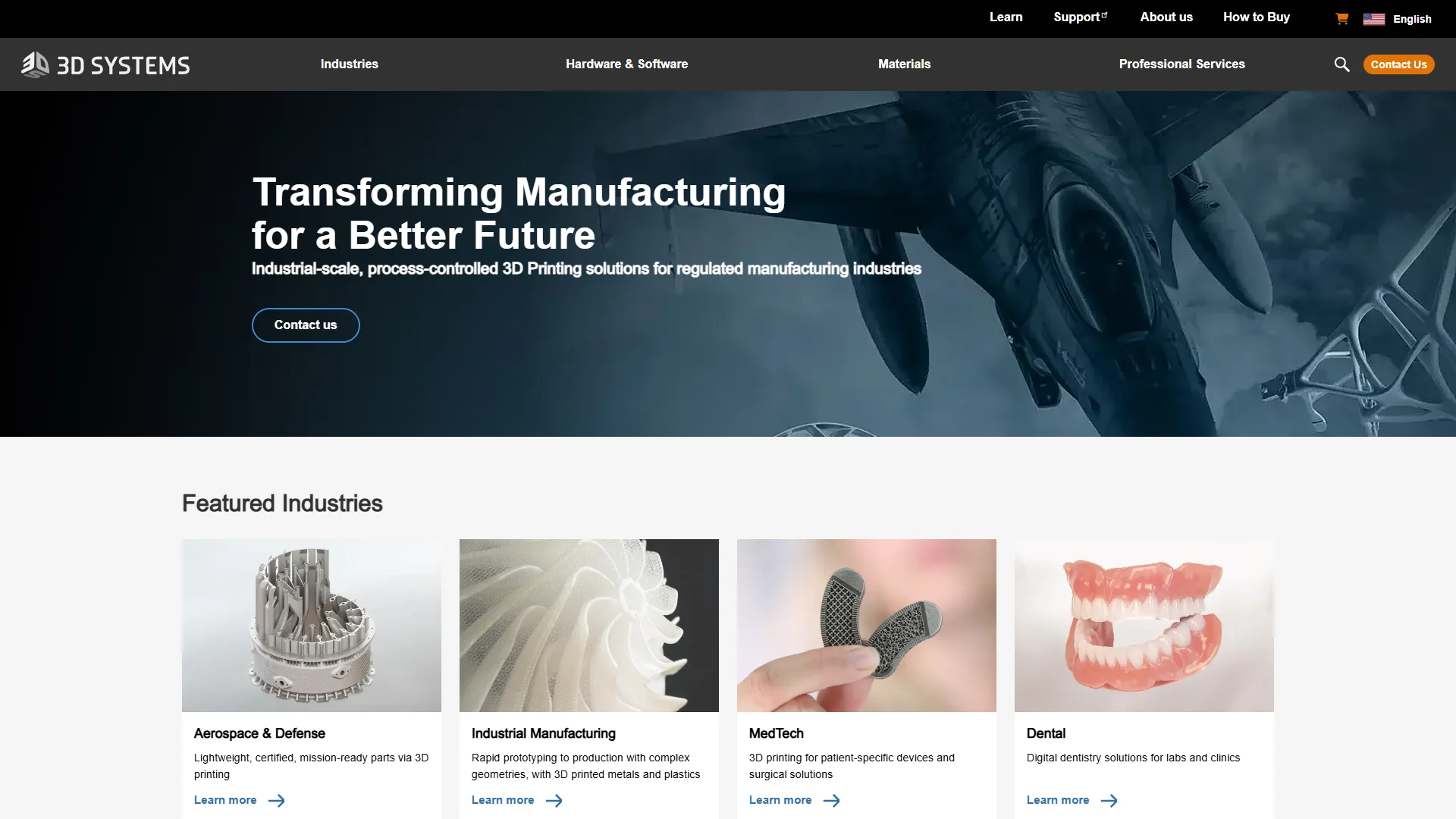
Pros / key features:
- Application Innovation Group support for manufacturing solutions.
- Service plans intended to support printer performance and longevity.
- Training and educational resources for additive manufacturing.
- Supplied research references manufacturing aids, production tooling, and metals-related applications.
Use cases / best for: 3D Systems is appropriate for organizations evaluating an integrated combination of hardware, software, application support, training, and service. Specific machine, material, industry, and certification choices should be matched to the project rather than inferred from the company’s broad portfolio description.
6. Endeavor 3D
Overview: Endeavor 3D is a contract manufacturing provider focused on mass-customized, on-demand prototypes and production parts. Its supplied research describes services spanning product design, prototyping, production, quality assurance, and fulfillment.
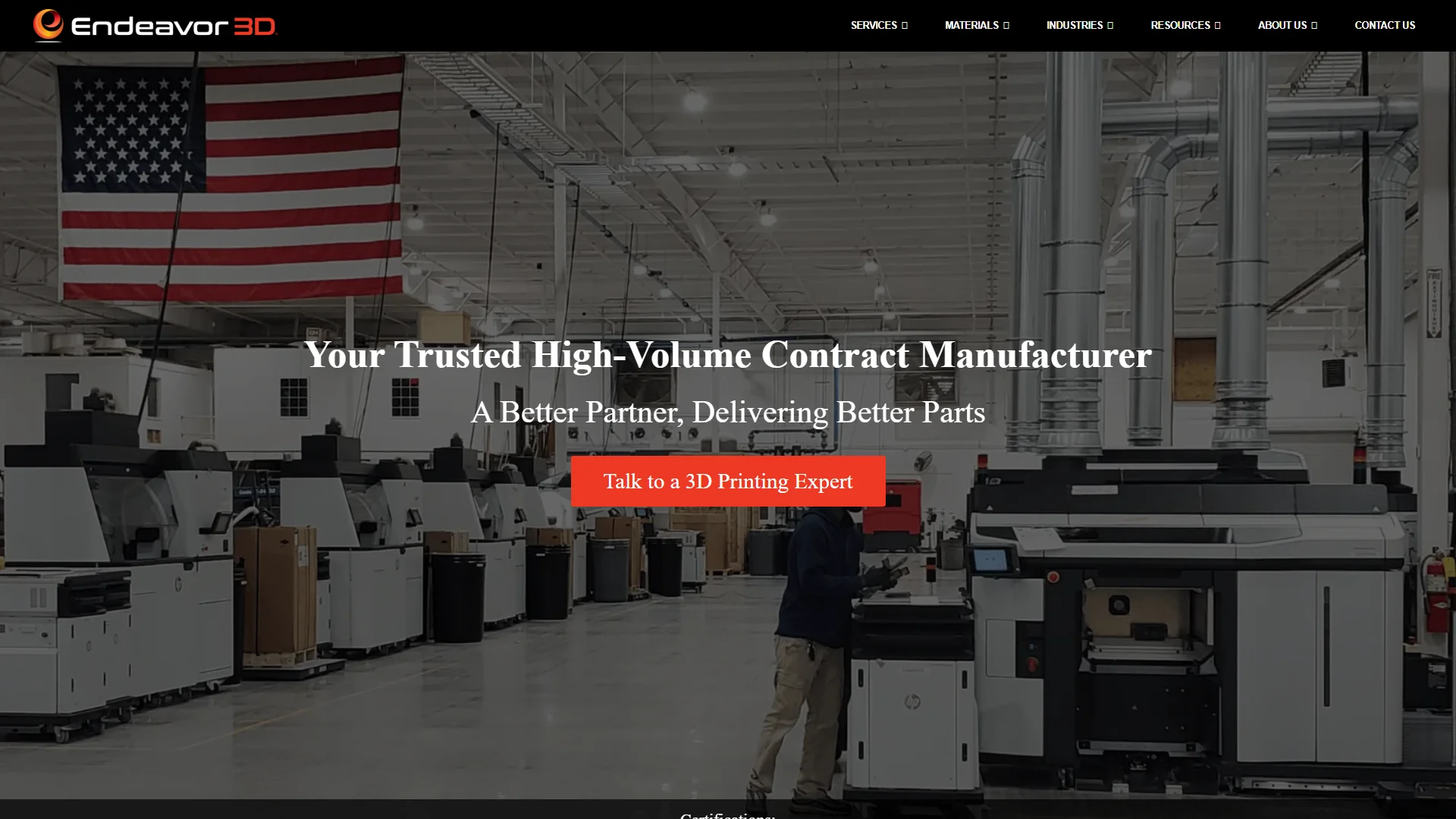
Pros / key features:
- Design for Additive Manufacturing support and engineering collaboration.
- Services from concept development through prototyping and final production.
- Premium finishes and fine detail are part of its stated positioning.
- Applications include automotive, aerospace, healthcare, industrial manufacturing, and consumer products.
- ISO 9001-2015 certification and ITAR registration are stated in the supplied research.
- Capabilities include jigs, fixtures, end-of-arm tooling, spare parts, and low-volume functional parts.
Use cases / best for: Endeavor 3D is well suited to organizations that need engineering input, rapid prototyping, low-volume production, or a managed transition from design to manufacturing. Buyers should confirm the exact process, material, inspection method, fulfillment arrangement, and certification applicability for their project.
7. RapidDirect
Overview: RapidDirect is included in the supplied roster as a 3D printing and manufacturing brand. The provided research dossier does not clearly document its founding details, location, product categories, processes, materials, certifications, customer segments, or service regions.
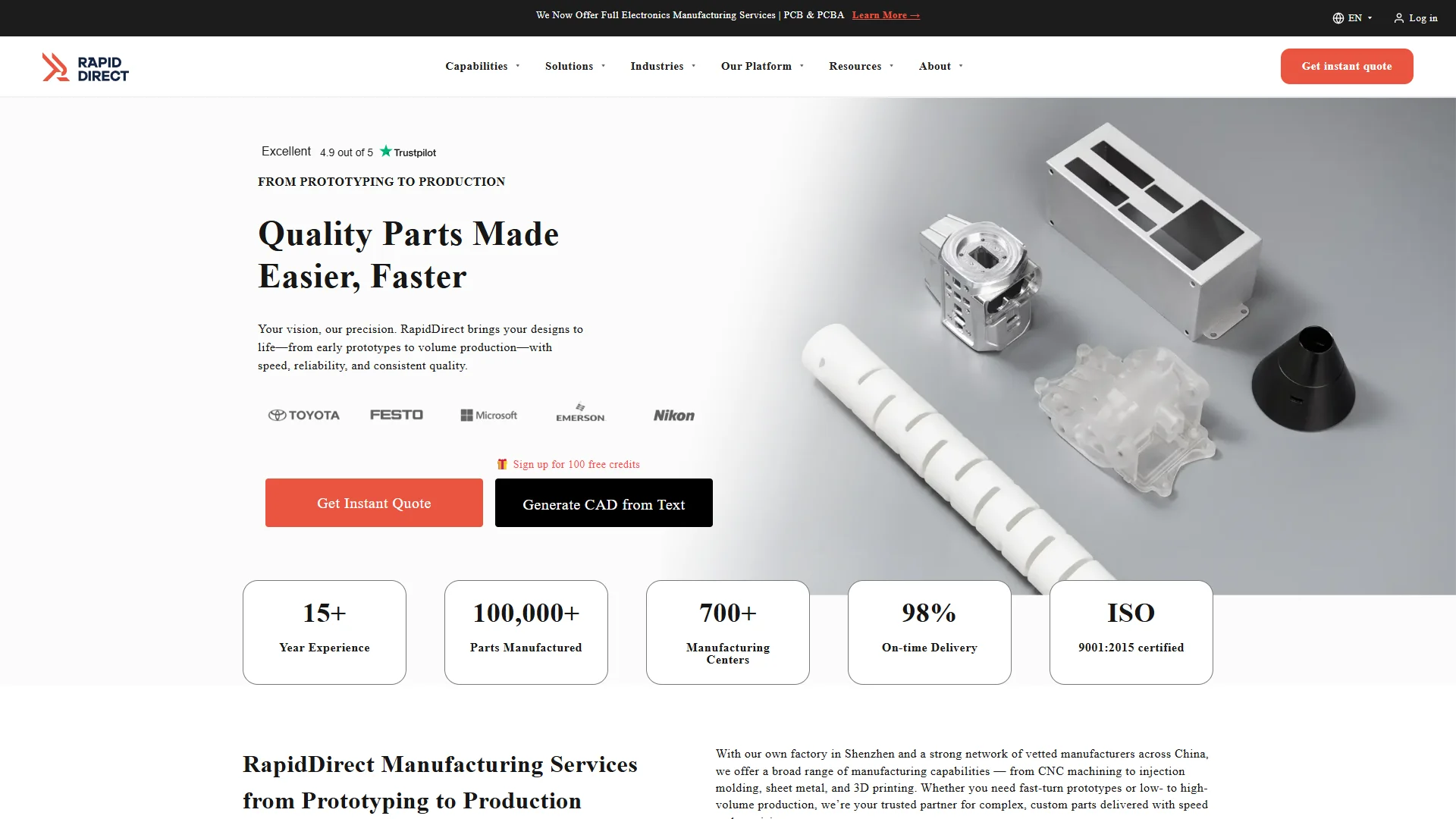
Pros / key features:
- Official website is available for direct capability and quotation checks.
- Its inclusion makes it a candidate for buyers conducting a broader supplier comparison.
- Process, material, quality, and delivery claims should be verified for the specific project.
Use cases / best for: RapidDirect may be considered during a quotation exercise when a buyer is comparing external manufacturing suppliers. Because the supplied evidence is limited, the buyer should request documented information about available technologies, materials, tolerances, inspection, certifications, intellectual-property protection, and shipping before selecting it.
How to Choose Among 3D Printing Manufacturers
- Define the procurement type: Decide whether the requirement is for a printer, materials and accessories, an online printing service, or a contract manufacturer.
- Match the process to the part: Compare polymer and metal options, dimensional requirements, surface finish, strength, heat resistance, and expected production volume.
- Review material documentation: Ask for technical data sheets, compatibility information, traceability, and any required biocompatibility or industry approvals.
- Check quality controls: Confirm inspection methods, tolerances, quality-management certifications, calibration practices, and the scope of any certification.
- Evaluate design support: Engineering review and Design for Additive Manufacturing assistance can reduce failed builds and improve cost efficiency.
- Consider scale and repeatability: A supplier suitable for one prototype may not be suitable for thousands of repeat parts. Confirm capacity, repeat-order procedures, and supplier continuity.
- Compare commercial terms: Review quotation transparency, tooling or setup charges, minimum quantities, shipping, lead times, revision handling, and intellectual-property protections.
- Verify support: For purchased equipment, assess installation, training, maintenance, spare parts, software updates, and warranty coverage.
Final Verdict
The seven brands serve different roles rather than representing identical alternatives. TCT Asia is best approached as a research and discovery starting point until its current official scope is confirmed. Xometry stands out for a broad online manufacturing workflow and multiple documented 3D printing processes. 3D Printers Depot is oriented toward equipment, scanners, materials, and accessories. LulzBot focuses on TAZ-series printer platforms, while 3D Systems combines hardware, software, application support, training, and service. Endeavor 3D is the clearest fit for managed contract manufacturing and engineering-led production support. RapidDirect should remain on a comparison shortlist only after its project-specific capabilities are verified. The right choice depends on whether the priority is equipment ownership, rapid prototyping, production parts, engineering support, or supplier discovery.
FAQs
Are all seven brands direct 3D printer manufacturers?
No. The list includes an industry research platform, an online manufacturing service, an equipment supplier, printer-focused brands, and contract manufacturing providers. Buyers should identify the business model before comparing prices or capabilities.
Which option is most suitable for custom production parts?
Xometry and Endeavor 3D have the clearest supplied evidence for custom parts and production support. Xometry emphasizes online quoting and multiple processes, while Endeavor 3D emphasizes engineering, prototyping, production, quality assurance, and fulfillment.
What should be verified before placing an order?
Confirm the exact process, material, tolerances, finish, inspection method, lead time, price basis, certification scope, intellectual-property terms, shipping arrangements, and support responsibilities. These details can vary by machine, material, project, and supplier location.