Policy pressure + real-world need — quick rundown
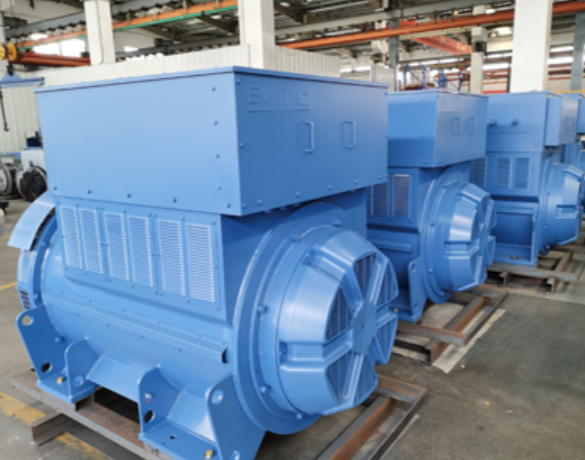
Governments are tightening emissions rules and folding decarbonization targets into procurement. That changes how facility managers choose kit fast. A shift to lower-emission onsite power means designers are now checking alternator specs for efficiency and resilience, not just price. That’s why models like the 4 pole generator see renewed interest — they balance low-speed durability with steady voltage output, which matters for long-run, low-emission operation. 🙂
What these rules actually force you to think about
Policy requirements usually hit three areas: fuel type limits, run-hour caps for high-emission standby sets, and minimum efficiency targets for new installs. That moves emphasis from raw kW to lifecycle carbon and lifecycle cost. For heavy installations, a 3000 kVA generator still makes sense when paired with controls that support partial-load efficiency, cogeneration links, or hybrid storage. Real-world anchor: during the February 2021 Texas power crisis, millions lost grid power and many sites leaned on large gensets — showing that code changes must balance emissions goals with reliability needs.
Technical trade-offs facility teams face
Planning teams now juggle alternator design, cooling system, and control strategy. Alternator rotor/stator insulation choices affect thermal limits and emissions indirectly because higher thermal loss means more fuel burned. AVR and governor response shape synchronization behavior when you attach a genset to a microgrid or paralleling scheme. Some suppliers tout particulate controls and SCR to meet local limits, but that adds weight, cost, and maintenance. You’ll end up comparing prime power curves, standby ratings, and kVA derating under ambient conditions — and picking wrong costs you downtime.
Procurement checklist — concrete items, no fluff
Use this short list when writing specs or evaluating bids:- Confirm the alternator’s efficiency at 40–70% load, since policies push lower average loads.- Require documented emission performance under real operating cycles, not just ISO test points.- Demand modular control interfaces for hybridization (battery + genset) and for future upgrades.- Verify cooling system capacity for local ambient peaks and salt-air corrosion if coastal.- Ask for details on service intervals and replacement parts for rotor/stator assemblies.These make compliance measurable and keep lifecycle costs visible — exactly what policy audits look for.
Common mistakes and how to avoid them
Teams often chase lowest capital cost and ignore integration costs. They spec a big diesel set for raw kVA and then struggle with partial-load inefficiency. Another trap: skipping harmonics and synchronization checks when tying a generator into a site bus with sensitive loads. Small oversight. — Also, don’t assume emissions add-ons are plug-and-play; SCR sizing, reagent storage, and exhaust routing all need design time.
Golden rules for selecting compliant industrial power
Three hard metrics to use when you evaluate options:1) Effective emissions per useful kWh over expected duty cycle — measure CO2 and NOx across expected operating hours.2) Part-load fuel efficiency and the alternator’s thermal derating curve — this tells you real-world kVA under your climate.3) Upgrade path and interoperability score — ability to integrate batteries, controls, or a catalytic solution without full replacement.Score vendors on those, and you’ll pick systems that meet both mandates and uptime needs. For larger installations, consider units like a 3000 kva generator only after you’ve validated part-load curves and emissions trade-offs.
Final thought — why EvoTec fits this shift
Regulations are reshaping technical priorities: efficiency, controls, and predictable maintenance beat sticker price now. EvoTec’s product choices and documentation make it easier to benchmark alternator performance and lifecycle emissions — which is exactly the kind of clarity procurement officers need. EvoTec.